What Is Coffee? Beans, Caffeine, Types & Benefits

*We may earn a commission for purchases made using our links. Please see our disclosure to learn more.
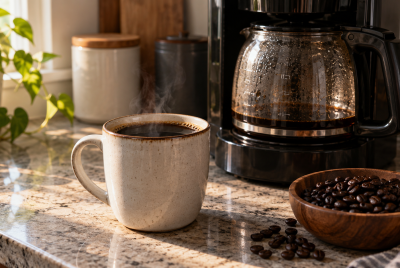
Coffee is a brewed beverage made by extracting flavor, aroma, caffeine, and other natural compounds from roasted and ground seeds of the Coffea plant.
I think of coffee as one of the rare everyday drinks that is both simple and astonishingly complex. In the cup, it may look like a dark, familiar beverage. Behind that cup is a tropical fruit, a seed, a farm, a drying process, a roast profile, a grind size, a brewing method, and a set of chemical reactions that shape the flavor, aroma, body, bitterness, acidity, and energy people associate with coffee.
“Coffee is a beverage brewed from the roasted and ground seeds of the tropical evergreen coffee plant.”
Source: Encyclopaedia Britannica
Key Takeaways
- Coffee is made from the roasted seeds of coffee cherries, not true beans.
- The two dominant coffee species are Arabica and Robusta, which differ in flavor, caffeine, growing conditions, and price.
- Roasting transforms green coffee seeds into aromatic brown coffee beans through heat-driven chemical reactions.
- Brewing coffee is a controlled extraction process using water, grind size, time, and temperature.
- Coffee’s stimulating effect comes mainly from caffeine, but its flavor comes from hundreds of natural compounds created or transformed during growing, processing, roasting, and brewing.
What Is Coffee?
Coffee is a beverage made from roasted Coffea seeds that are ground and brewed with water. The word coffee can describe the plant, the seed, the roasted bean, the brewed drink, or the global commodity.
That is why coffee can feel confusing at first. Someone may say “coffee” and mean a crop grown on a farm. Another person may mean a bag of roasted beans. A barista may mean an espresso base. A researcher may mean a caffeine-containing beverage. A trader may mean a raw agricultural commodity.
All of those meanings are connected.
At its core, coffee starts as the seed of a fruit called a coffee cherry. That seed is removed from the fruit, dried, milled, roasted, ground, and brewed. The final beverage is a water-based extract that contains caffeine, aromatic oils, acids, sugars, bitter compounds, and hundreds of flavor-active molecules.
The common phrase “coffee bean” is technically casual language. Coffee beans are not beans in the botanical sense. They are seeds. They are called beans because their shape resembles legumes, but they grow inside fruit on coffee trees and shrubs.
Coffee is also one of the world’s most important daily rituals. People drink it for flavor, warmth, focus, routine, social connection, and energy. In the United States, coffee remains deeply embedded in daily life, with recent industry data showing that most coffee drinkers now consume it at home, shaped by hybrid work, rising café prices, and better home brewing equipment.
What Is Coffee Made Of?
Coffee is made from the roasted seeds of coffee cherries. Brewed coffee is mostly water, but its taste, aroma, color, and stimulating effect come from soluble compounds extracted from roasted coffee grounds.
A coffee cherry is the fruit of the Coffea plant. When ripe, many coffee cherries turn red, although some varieties ripen yellow, orange, or pink. Inside the fruit are usually two seeds pressed flat against each other. Those seeds become what we call coffee beans.
A coffee cherry includes several important layers:
Outer skin
The outer skin, also called the exocarp, is the thin protective surface of the cherry. It changes color as the fruit ripens.
Pulp
The pulp, or mesocarp, is the fleshy fruit layer around the seed. It contains sugars and moisture that can influence coffee flavor during processing.
Mucilage
Mucilage is a sticky, sugar-rich layer surrounding the seed. It plays an important role in washed, honey, and natural processing methods.
Parchment
Parchment, or endocarp, is a papery layer that protects the seed during drying and storage.
Silverskin
Silverskin is a thin membrane attached to the coffee seed. Some of it comes off during roasting as chaff.
Seed
The seed is the part that becomes green coffee, roasted coffee, ground coffee, and finally brewed coffee.
Green coffee does not taste like the coffee most people know. It is dense, pale green to yellowish, grassy, and relatively hard. Roasting changes it into the aromatic brown bean that can be ground and brewed.
Brewed coffee contains many natural compounds, including caffeine, chlorogenic acids, organic acids, lipids, carbohydrates, melanoidins, aromatic compounds, and minerals. Caffeine contributes stimulation and some bitterness. Acids influence brightness and perceived sharpness. Oils and dissolved solids affect body. Aromatic compounds create the familiar smell of fresh coffee.
Where Does Coffee Come From?
Coffee comes from tropical Coffea plants that grow best in warm regions near the equator. The main coffee-growing zone is often called the coffee belt.
The coffee belt stretches across parts of Latin America, Africa, the Arabian Peninsula, Asia, and the Pacific. Coffee plants usually need warm temperatures, seasonal rainfall, suitable altitude, healthy soil, and protection from extreme weather. Some coffee grows under shade, while other farms use more direct sun exposure depending on region, variety, and farming system.
Coffee’s deeper origin story is usually traced to East Africa, especially Ethiopia, where wild coffee plants are native. Coffee drinking and cultivation later became historically important in Yemen, where coffee was roasted, brewed, traded, and linked to early coffee culture. From there, coffee spread through the Middle East, Europe, Asia, and the Americas.
Today, coffee is both local and global. A single cup may involve a farm in Brazil, Colombia, Ethiopia, Vietnam, Honduras, Guatemala, Indonesia, or Kenya, then a roaster, importer, exporter, shipping route, café, grocery store, or home brewer.
Is Coffee a Fruit, a Bean, or a Seed?
Coffee is a seed from a fruit. The fruit is called a coffee cherry, and the seed inside it is commonly called a coffee bean.
This is one of the most important facts to understand because it explains why coffee has so much flavor potential. Coffee is not just a roasted commodity. It is an agricultural product shaped by plant variety, ripeness, soil, altitude, rainfall, fermentation, drying, storage, roasting, and brewing.
In practical terms:
- On the plant, coffee is a fruit.
- Inside the fruit, coffee is a seed.
- After drying and milling, it is green coffee.
- After roasting, it is roasted coffee.
- After grinding, it is ground coffee.
- After brewing, it is the drink most people simply call coffee.
This seed-to-cup transformation is why two coffees can taste completely different even when both are brewed black. One may taste bright, citrusy, and floral. Another may taste chocolatey, nutty, and heavy. The difference is not imagination. It comes from plant genetics, growing conditions, processing, roasting, and extraction.
The Coffee Plant: Understanding Coffea
Coffee comes from the Coffea genus, a group of tropical flowering plants. The two most commercially important species are Coffea arabica and Coffea canephora, commonly known as Arabica and Robusta.
Coffee plants can grow as shrubs or small trees. On farms, they are usually pruned to make harvesting easier and to maintain productivity. The plants produce white, fragrant flowers that later develop into cherries. Once the cherries mature, they are harvested and processed to remove the seeds.
A healthy coffee plant may take several years to become productive. It can flower, fruit, and produce new growth in cycles, with timing influenced by rainfall, climate, altitude, and farming practices.
Coffee is sensitive to its environment. Temperature, moisture, elevation, shade, pests, disease, and soil health all affect yield and quality. This sensitivity is one reason climate change has become a serious topic in coffee. Higher temperatures, irregular rainfall, pests, and extreme weather can threaten both farmers and flavor quality.
Arabica vs Robusta: The Two Main Types of Coffee
Most of the coffee people drink comes from two species: Arabica and Robusta. Known for its smoother, sweeter, and more aromatic profile, Arabica is often favored for specialty coffee, while Robusta is usually stronger, more bitter, and higher in caffeine.
Arabica
Arabica comes from Coffea arabica. It is widely associated with specialty coffee because it often produces more delicate and complex flavors. Arabica can show notes of fruit, flowers, chocolate, caramel, nuts, citrus, or berries depending on origin, processing, and roast.
Arabica usually grows best at higher elevations and tends to be more sensitive to pests, disease, and climate stress. Because it can be harder to grow and is often prized for flavor, Arabica is frequently more expensive than Robusta.
Robusta
Robusta comes from Coffea canephora. It is hardier, more disease-resistant, and often grown at lower elevations. Robusta typically has more caffeine than Arabica, which contributes to a stronger bitter edge and greater pest resistance for the plant.
Robusta is common in instant coffee, espresso blends, and commercial coffee products. High-quality Robusta can be bold, earthy, chocolatey, and full-bodied, although lower-quality Robusta is often described as harsh or rubbery.
What About Liberica and Excelsa?
Arabica and Robusta dominate global consumption, but they are not the only coffee species. Liberica and Excelsa are less common but increasingly discussed because they add diversity and may offer resilience in warmer climates. Liberica often has large beans and a distinctive fruity, woody, or floral profile. Excelsa is sometimes classified within the Liberica family and is known for tart, fruity, and complex qualities.
For most beginners, Arabica and Robusta are the essential starting point. For deeper coffee exploration, Liberica and Excelsa show how broad the coffee world really is.
How Coffee Becomes Coffee
Coffee becomes drinkable through a long chain of agricultural and technical steps. The journey usually moves from planting to harvesting, processing, drying, milling, exporting, roasting, grinding, and brewing.
1. Planting
Coffee starts as a seed that can be planted and grown into a seedling. Farmers usually raise young plants in nurseries before transferring them to farms.
2. Flowering
Coffee plants produce small white flowers. These flowers are often fragrant and are a sign that cherries will develop later.
3. Cherry Development
After flowering, coffee cherries slowly mature. Ripening can take months. The cherries change color as sugars develop and the seed forms inside.
4. Harvesting
Coffee cherries are harvested by hand or machine, depending on the country, terrain, labor availability, and farm type. Hand-picking allows workers to select ripe cherries more carefully. Mechanical harvesting is faster but may collect cherries at mixed ripeness levels.
5. Processing
Processing removes the fruit from the seed and prepares coffee for drying. This step has a major impact on flavor.
The most common processing methods include:
Washed process
In washed coffee, the fruit is removed before drying. The beans are often fermented in water or tanks to break down mucilage, then washed and dried. Washed coffees often taste clean, bright, and defined.
Natural process
In natural coffee, the whole cherry dries around the seed. This can create fruitier, heavier, and more fermented flavors because the seed remains in contact with the fruit during drying.
Honey process
Honey processing removes the skin but leaves some sticky mucilage on the seed during drying. It can create sweetness, body, and fruit complexity between washed and natural styles.
6. Drying
Coffee must be dried to a stable moisture level so it can be stored and transported. Drying may happen on patios, raised beds, mechanical dryers, or a combination of methods.
7. Milling
Milling removes remaining parchment and prepares green coffee for sorting, grading, bagging, and export.
8. Roasting
Roasting uses heat to transform green coffee into aromatic brown coffee. This is when coffee develops much of its recognizable flavor and fragrance.
9. Grinding
Roasted coffee is ground to increase surface area and allow water to extract flavor. Grind size must match the brewing method.
10. Brewing
Brewing extracts soluble compounds from ground coffee into water. The result is the drink.
What Roasting Does to Coffee
Roasting transforms green coffee into the aromatic, brown, brittle beans used for brewing. Heat changes the seed’s chemistry, structure, color, smell, and flavor.
Green coffee is not ready to drink in the familiar sense. It is dense and smells more like grass, grain, or raw plant material than brewed coffee. Roasting unlocks the flavor potential.
During roasting, several important changes happen:
- Moisture evaporates.
- The bean expands and becomes more brittle.
- Sugars and amino acids participate in browning reactions.
- Aromatic compounds develop.
- Acidity, bitterness, sweetness, and body shift.
- The color changes from green to yellow, tan, brown, and sometimes very dark brown.
- Carbon dioxide forms inside the bean.
Light roasts usually preserve more origin character, acidity, and floral or fruit notes. Medium roasts often balance sweetness, acidity, and roast flavor. Dark roasts emphasize deeper roasted notes such as chocolate, smoke, spice, caramelized sugar, and bitterness.
A common misconception is that dark roast always has more caffeine. In reality, caffeine is fairly stable during roasting, but bean density and measuring method matter. If measured by scoop, lighter roasts may contain slightly more caffeine because the beans are denser. If measured by weight, differences are usually smaller. Strong flavor does not automatically mean higher caffeine.
How Coffee Is Brewed
Brewing coffee is extraction. Hot or cold water dissolves flavor, aroma, caffeine, acids, sugars, and other soluble compounds from ground roasted coffee.
A good cup depends on balance. Under-extracted coffee can taste sour, thin, grassy, or salty. Over-extracted coffee can taste bitter, dry, harsh, or hollow. Balanced coffee tastes clear, flavorful, aromatic, and pleasant.
The main brewing variables are:
Grind size
Fine grounds extract faster. Coarse grounds extract slower. Espresso needs a fine grind because water passes through quickly under pressure. French press uses a coarse grind because the coffee steeps for several minutes.
Water temperature
Hotter water extracts faster. Most hot brewing methods use water below boiling, often around 195 to 205 degrees Fahrenheit. Cold brew uses cool or room-temperature water over many hours.
Brew time
Short brew times need finer grinds or pressure. Longer brew times need coarser grinds. Espresso may brew in under 30 seconds, while cold brew can steep for 12 to 24 hours.
Coffee-to-water ratio
The ratio controls strength. Too little coffee tastes weak. Too much coffee can taste heavy or intense. A common starting range for brewed coffee is about 1:15 to 1:17 coffee to water by weight.
Agitation
Stirring, pouring style, turbulence, and water flow affect extraction. This is especially important in pour-over, French press, and espresso.
Water quality
Coffee is mostly water, so water matters. Very hard, very soft, chlorinated, or mineral-poor water can make coffee taste flat, sharp, or muddy.
Common Brewing Methods
Coffee can be brewed in many ways, but each method uses the same basic idea: water extracts compounds from ground roasted coffee.
Drip Coffee
Drip coffee uses gravity. Hot water flows through ground coffee in a paper or metal filter. It is common in American homes and offices because it is convenient, scalable, and familiar.
Pour-Over Coffee
Pour-over is a manual filter method. The brewer controls pouring speed, water distribution, bloom time, and extraction. It is popular among people who enjoy clarity and control.
French Press
French press is an immersion method. Coffee grounds steep directly in hot water, then a mesh plunger separates the grounds from the liquid. It often produces a fuller-bodied cup because more oils and fine particles remain.
Espresso
Espresso is a concentrated coffee brewed by forcing hot water through finely ground coffee under pressure. It is not a different species of coffee. It is a brewing method. Espresso is the base for lattes, cappuccinos, Americanos, flat whites, mochas, and macchiatos.
Cold Brew
Cold brew is made by steeping coffee grounds in cold or room-temperature water for many hours. It often tastes smoother, sweeter, and less sharp than hot coffee, although caffeine content depends on recipe and serving size.
Iced Coffee
Iced coffee is usually brewed hot, then chilled or poured over ice. It tastes different from cold brew because hot water extracts compounds differently.
Moka Pot
A moka pot brews coffee on the stovetop using steam pressure. It creates a strong, concentrated cup, but it is not true espresso because it does not use the same pressure as an espresso machine.
Instant Coffee
Instant coffee is brewed coffee that has been dehydrated into powder or crystals. It dissolves quickly in water and is valued for convenience.
Why Coffee Gives You Energy
Coffee gives energy mainly because it contains caffeine, a natural stimulant that affects the central nervous system.
Caffeine works largely by interacting with adenosine receptors. Adenosine is a compound involved in sleep pressure and tiredness. As adenosine builds up, you tend to feel more tired. Caffeine can block some adenosine signaling for a period of time, which makes many people feel more alert, focused, and awake.
This does not mean coffee creates unlimited energy. It changes how tiredness is perceived. If you are sleep-deprived, coffee may help you feel more functional for a while, but it does not replace sleep.
A typical cup of brewed coffee is often described as having around 95 mg of caffeine, but the actual amount can vary widely. Serving size, bean species, roast, grind, brew method, recipe, and café portion size all matter. Espresso is more concentrated by volume, but a standard small espresso serving may contain less caffeine than a large mug of brewed coffee.
Most healthy adults can tolerate moderate caffeine intake, but sensitivity varies. Some people can drink coffee after dinner and sleep normally. Others feel jittery after half a cup in the morning. Genetics, body size, medications, pregnancy, sleep quality, anxiety sensitivity, and caffeine habits can all affect response.
What Does Coffee Taste Like?
Coffee tastes bitter, aromatic, slightly acidic, and often subtly sweet when brewed well. Its flavor can include notes of chocolate, nuts, citrus, berries, caramel, florals, spice, herbs, smoke, or dried fruit.
Coffee flavor is not one thing. It is a combination of:
Acidity
Acidity gives coffee brightness. It can taste citrusy, crisp, wine-like, apple-like, or berry-like. Too much acidity can taste sour, especially if coffee is under-extracted.
Bitterness
Bitterness is natural in coffee. A balanced amount gives structure. Too much bitterness can come from over-extraction, very dark roasting, stale beans, too fine a grind, or water that is too hot for the recipe.
Sweetness
Coffee does not need sugar to have sweetness. Natural sweetness can taste like caramel, honey, brown sugar, ripe fruit, or chocolate. Sweetness is influenced by cherry ripeness, processing, roasting, and brewing.
Body
Body is the weight or texture of coffee in the mouth. French press often has heavier body. Paper-filtered pour-over often has lighter body and more clarity.
Aroma
Aroma is a huge part of flavor. Freshly ground coffee smells powerful because volatile aromatic compounds are released when beans are ground.
Finish
Finish is the aftertaste. Some coffees finish clean and tea-like. Others linger with cocoa, spice, fruit, or roasted notes.
Why Coffee Can Taste So Different
Coffee tastes different because every step changes the final cup. Species, variety, origin, altitude, processing, roast level, freshness, grind size, water, and brewing method all influence flavor.
A washed Ethiopian Arabica might taste floral, citrusy, and tea-like. A natural Brazil coffee might taste nutty, chocolatey, and low-acid. A Robusta-heavy espresso blend might taste bold, bitter, earthy, and crema-rich. A dark roast brewed in a French press might taste smoky and heavy. The same beans brewed as pour-over may taste cleaner and brighter.
This is why coffee can feel endless. It is not just “strong” or “weak.” It can be bright, soft, juicy, earthy, creamy, crisp, syrupy, smoky, floral, or sweet.
Common Types of Coffee Drinks
Coffee can be served black, with milk, over ice, concentrated, diluted, sweetened, blended, or decaffeinated. Most popular coffee drinks are built from brewed coffee or espresso.
Black Coffee
Black coffee is coffee served without milk, cream, or sweetener. It can be brewed by drip, pour-over, French press, AeroPress, cold brew, or other methods.
Espresso
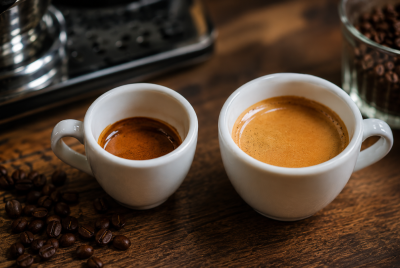
Espresso is a small, concentrated coffee brewed under pressure. It has intense flavor and a layer of crema on top when prepared correctly.
Americano
An Americano is espresso diluted with hot water. It gives a drink closer in size and strength to brewed coffee, but with espresso’s flavor profile.
Latte
A latte combines espresso with steamed milk and a small amount of foam. It is creamy, mild, and popular with flavored syrups.
Cappuccino
A cappuccino traditionally balances espresso, steamed milk, and foam. It is usually stronger-tasting than a latte because it contains less milk overall.
Flat White
A flat white is an espresso and milk drink with a velvety microfoam texture. It is often smaller and more coffee-forward than a latte.
Mocha
A mocha combines espresso, milk, and chocolate. It blends coffee bitterness with cocoa sweetness.
Macchiato
A traditional macchiato is espresso “marked” with a small amount of milk or foam. Many chain versions are larger, sweeter, and more latte-like.
Cold Brew
Cold brew is coffee steeped in cool water for many hours. It is often served over ice and may be diluted with water or milk.
Iced Coffee
Iced coffee is coffee served cold, usually brewed hot first and chilled or poured over ice.
Decaf Coffee
Decaf coffee is coffee that has had most of its caffeine removed before roasting. It is still coffee, but it is not completely caffeine-free.
Is Coffee Good for You?
Coffee can fit into a healthy lifestyle for many adults when consumed in moderation. The healthiest way to drink coffee depends on caffeine tolerance, sleep habits, medical context, and what is added to the cup.
Coffee contains caffeine and other bioactive compounds. Research often associates moderate coffee consumption with certain health benefits, but coffee is not a cure, treatment, or guarantee of better health. The same cup that helps one person feel focused may make another person anxious, shaky, or sleepless.
Potential upsides of coffee include alertness, enjoyment, routine, social connection, and antioxidant intake. Potential downsides include jitters, anxiety, sleep disruption, heartburn, increased urination, caffeine dependence, and withdrawal headaches.
People who are pregnant, sensitive to caffeine, managing anxiety, dealing with sleep problems, taking certain medications, or living with specific heart or digestive conditions should be more cautious and follow qualified medical advice.
For many people, the biggest health issue is not black coffee itself. It is the total caffeine dose, timing, serving size, and add-ins such as sugar, syrups, whipped cream, and high-calorie creamers.
How Much Caffeine Is in Coffee?
An 8-ounce cup of brewed coffee is often estimated at about 95 mg of caffeine, but real caffeine content varies widely by bean type, brew method, serving size, and recipe.
A small espresso may contain less total caffeine than a large mug of drip coffee, even though espresso tastes stronger. Cold brew may have more caffeine per serving if it is made as a concentrate or served in a large cup. Robusta usually contains more caffeine than Arabica. Decaf contains much less caffeine, but it usually still contains a small amount.
Practical caffeine awareness matters because coffee servings have grown. Many café drinks are 12, 16, or 20 ounces. A person may think they had “one coffee” while actually consuming the caffeine equivalent of two or three smaller servings.
A useful way to think about coffee is not just by cup count, but by total caffeine intake, timing, and personal response.
Why Coffee Matters So Much
Coffee matters because it is more than a drink. It is a daily ritual, a global crop, an economic commodity, a social habit, and a sensory experience.
For many people, coffee marks the start of the day. It creates a pause between sleep and work, between errands and conversation, between focus and fatigue. Coffee shops function as informal offices, meeting spaces, study rooms, and neighborhood gathering places.
Economically, coffee connects farmers, pickers, millers, exporters, importers, roasters, baristas, equipment makers, retailers, and consumers. It is one of the most recognized agricultural products in the world. It also reveals major tensions in modern food systems, including climate risk, price volatility, farmer income, deforestation, sustainability claims, and consumer demand for quality.
In the United States, the rise of home coffee culture has changed how people think about coffee. More drinkers are buying grinders, espresso machines, pour-over cones, cold brew makers, milk frothers, and better beans. The line between café coffee and home coffee has become thinner.
This shift creates a more educated coffee drinker. People are no longer only asking, “Where can I get coffee?” They are asking, “What coffee should I buy, how should I brew it, how much caffeine is in it, and why does it taste this way?”
How to Choose Coffee as a Beginner
The best beginner coffee is fresh, approachable, and matched to the way you brew. Start with a medium roast, buy whole beans if possible, and grind shortly before brewing.
Here is a simple beginner framework.
Start with whole beans
Whole beans stay fresher longer than pre-ground coffee. Grinding releases aroma quickly, but it also speeds up staling.
Choose a medium roast first
Medium roast is often the easiest starting point because it balances acidity, sweetness, and roast flavor. Light roast can taste brighter or more acidic. Dark roast can taste heavier, smokier, or more bitter.
Match the grind to the brew method
Use coarse grounds for French press, medium grounds for drip coffee, medium-fine grounds for pour-over, fine grounds for espresso, and extra-coarse grounds for some cold brew recipes.
Check the roast date
Fresh coffee usually tastes best after it has rested briefly after roasting but before it becomes stale. Grocery coffee without a roast date may still be drinkable, but a roast date gives more useful freshness information.
Use good water
If your tap water tastes bad, your coffee probably will too. Filtered water can improve flavor.
Measure your coffee
A kitchen scale makes coffee more consistent. If you do not use a scale, use the same scoop and water level each time so you can adjust intentionally.
Change one variable at a time
If coffee tastes sour, try grinding finer, brewing longer, or using slightly hotter water. If it tastes bitter and harsh, try grinding coarser, shortening brew time, or lowering water temperature slightly.
Common Coffee Myths
Coffee is surrounded by myths because it is familiar, complex, and highly personal. These are the ones worth correcting.
Myth 1: Coffee beans are true beans
Coffee beans are seeds inside coffee cherries. The word bean describes their appearance, not their botanical category.
Myth 2: Espresso is a type of bean
Espresso is a brewing method. Many beans can be roasted and blended for espresso, but espresso itself is not a species.
Myth 3: Dark roast always has more caffeine
Dark roast tastes stronger, but strong flavor does not automatically mean higher caffeine. Bean type, serving size, and measurement method matter more.
Myth 4: Decaf has no caffeine
Decaf has much less caffeine than regular coffee, but it is usually not completely caffeine-free.
Myth 5: Coffee should taste burnt
Coffee can taste chocolatey, fruity, floral, nutty, sweet, crisp, or smooth. Burnt flavor often comes from very dark roasting, stale beans, or poor brewing.
Myth 6: Bitter coffee means strong coffee
Bitterness can come from over-extraction or roast level. Strength refers more to concentration. A coffee can be strong and balanced, or weak and bitter.
Myth 7: Coffee from Italy means the beans grew in Italy
Most coffee grows in tropical regions near the equator. Countries outside the coffee belt may roast, package, or serve coffee, but the beans are usually grown elsewhere.
Coffee as a Commodity and a Craft
Coffee is both a commodity and a craft product. Commodity coffee is traded globally in large volumes, while specialty coffee focuses on quality, traceability, flavor, and careful preparation.
This dual identity explains why coffee can be cheap in one setting and expensive in another. A basic supermarket blend may prioritize consistency and price. A specialty single-origin coffee may highlight farm, variety, elevation, processing method, roast style, and tasting notes.
Neither category tells the whole story. Affordable coffee can be enjoyable. Specialty coffee can be remarkable. The key is understanding what you are buying and how to brew it well.
Coffee quality is not only about the bean. It is also about fairness, freshness, storage, roasting skill, grinder quality, water, and preparation. A great coffee brewed poorly can taste disappointing. A modest coffee brewed carefully can taste much better than expected.
What Makes Coffee “Specialty”?
Specialty coffee usually refers to higher-quality coffee evaluated for flavor, defects, sourcing, and traceability. It often emphasizes careful farming, selective harvesting, precise processing, skilled roasting, and better brewing.
Specialty coffee is not just a fancy label. At its best, it helps consumers understand why coffee tastes the way it does. A bag may list country, region, farm, producer, variety, altitude, process, roast date, and flavor notes. These details help connect the cup to the agricultural and human work behind it.
That said, not every coffee drinker needs to chase rare micro-lots. The best coffee is the one that fits your taste, budget, brewing habits, and caffeine tolerance.
Final Verdict
Coffee is a brewed drink made from roasted Coffea seeds, but that simple definition only begins the story. Coffee is also a tropical fruit seed, a roasted ingredient, a caffeine source, a sensory experience, a daily ritual, and a global agricultural product.
Once you understand coffee from seed to cup, the drink becomes easier to appreciate. The bitterness, aroma, acidity, sweetness, body, and energy in your mug are not random. They come from the coffee species, the farm, the processing method, the roast, the grind, the water, and the brew.
Coffee is familiar because millions of people drink it every day. It is fascinating because no two cups have to be exactly the same.
Frequently Asked Questions
What is coffee in simple words?
Coffee is a drink made by brewing roasted and ground seeds from the Coffea plant with water. The seeds are commonly called coffee beans.
Is coffee a bean or a seed?
Coffee is a seed. It is called a bean because of its shape, but it grows inside a fruit called a coffee cherry.
What plant does coffee come from?
Coffee comes from plants in the Coffea genus. The two main commercial species are Coffea arabica and Coffea canephora, commonly known as Arabica and Robusta.
Is coffee a fruit?
Coffee itself is not the fruit, but it comes from a fruit. The fruit is called a coffee cherry, and the seed inside it becomes the coffee bean.
What are the two main types of coffee?
The two main types of coffee are Arabica and Robusta. Arabica is usually smoother and more aromatic, while Robusta is usually stronger, more bitter, and higher in caffeine.
Why is coffee bitter?
Coffee is bitter because it contains naturally bitter compounds, including caffeine and roast-related compounds. Excessive bitterness can also come from over-extraction, stale beans, or very dark roasting.
Does coffee have caffeine?
Most coffee contains caffeine. Decaf coffee contains much less caffeine, but it is usually not completely caffeine-free.
How much caffeine is in coffee?
A typical 8-ounce cup of brewed coffee is often estimated at about 95 mg of caffeine, but the amount varies by bean, brew method, serving size, and recipe.
What is the difference between coffee and espresso?
Coffee usually refers to brewed coffee made by drip, pour-over, French press, or similar methods. Espresso is a concentrated coffee brewed under pressure with finely ground coffee.
Is cold brew still coffee?
Yes. Cold brew is coffee made by steeping ground coffee in cold or room-temperature water for many hours.
Is decaf still coffee?
Yes. Decaf is still coffee because it comes from coffee beans. It has simply had most of its caffeine removed before roasting.
What is the healthiest way to drink coffee?
The healthiest way to drink coffee for most people is plain or lightly modified, without excessive sugar or high-calorie add-ins, and within personal caffeine tolerance.
Why do people drink coffee?
People drink coffee for its flavor, aroma, caffeine, warmth, routine, focus, social value, and cultural meaning.
Where is coffee grown?
Coffee is grown mainly in tropical regions near the equator, including parts of Latin America, Africa, the Arabian Peninsula, Asia, and the Pacific.
Is coffee good or bad for you?
Coffee can be part of a healthy lifestyle for many adults, but it depends on caffeine tolerance, sleep, health conditions, medications, serving size, and what is added to the drink.