Breville vs De’Longhi: Which Espresso Brand Wins?
*We may earn a commission for purchases made using our links. Please see our disclosure to learn more.
Choosing between two of the world’s most respected espresso machine brands is no small task. Both Breville and De’Longhi have built loyal followings among home baristas and coffee enthusiasts, each offering a wide range of machines that promise cafe-quality espresso without leaving the house. While both brands deliver excellent performance, they differ significantly in design philosophy, technology, ease of use, and price points.
This comparison breaks down everything worth knowing, from entry-level machines to professional-grade models, to help anyone make a well-informed purchasing decision.
“The best espresso machine is the one that fits your lifestyle. Whether that means hands-on craftsmanship or one-touch simplicity, both approaches can produce an extraordinary cup.”
— James Hoffmann, World Barista Champion and coffee author
Key Takeaways
- Breville is an Australian brand widely praised for precision engineering, user-friendly interfaces, and manual control, making it a top choice for those who enjoy hands-on brewing.
- De’Longhi is an Italian brand known for elegant design, built-in grinders, and fully automatic machines that prioritize convenience over customization.
- Breville tends to perform better for espresso purists who want control over every variable of the extraction process.
- De’Longhi excels for users who want a one-touch experience with minimal daily effort.
- Both brands offer machines across a wide price range, from affordable entry-level models to high-end professional setups.
- Warranty, customer support, and long-term durability are important factors to consider alongside price when choosing between the two.
Breville Barista Express Espresso Machine



Craft café-quality espresso at home with the Breville Barista Express. This all-in-one espresso machine features an integrated conical burr grinder, delivering fresh grounds on demand for rich, full-bodied flavor. With precise digital temperature control (PID) and low-pressure pre-infusion, it ensures optimal extraction for a balanced espresso shot. The powerful steam wand allows manual milk texturing, perfect for creating creamy lattes and cappuccinos. Designed for both beginners and experienced baristas, this machine offers intuitive controls and a sleek brushed stainless steel finish, making it a stylish and functional addition to any kitchen.
The Breville Barista Express BES870XL is a strong choice for home espresso drinkers who want more control over their coffee without buying a separate grinder. Its built-in precision conical burr grinder delivers freshly ground coffee straight into the portafilter, while the grind size dial lets users adjust the texture based on the coffee beans they use.
- Built-in Grinder: Freshly grinds coffee beans for enhanced flavor.
- Precise Temperature Control: Ensures optimal espresso extraction.
- Manual Steam Wand: Creates rich microfoam for latte art.
- Steep Learning Curve: Requires practice for perfect shots.
- Bulky Size: Takes up counter space.
- Higher Price Point: More expensive than basic espresso machines.
De’Longhi Magnifica Plus Fully Automatic Espresso Machine

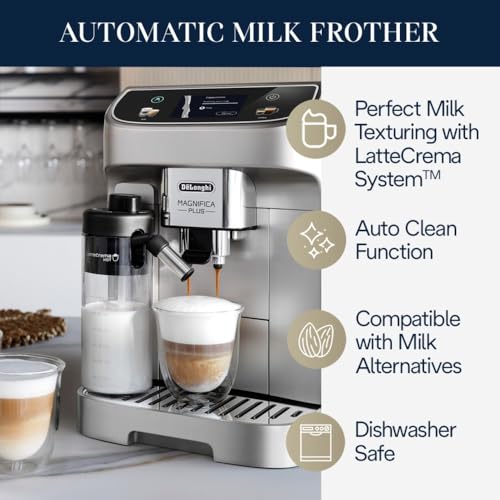
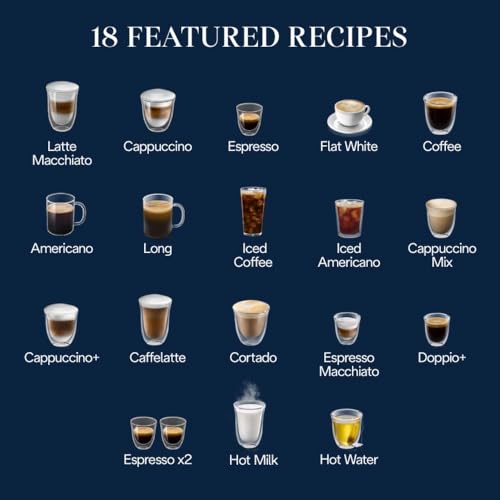
The De'Longhi Magnifica Plus Fully Automatic Espresso Machine is designed for coffee lovers who want café-style drinks at home with less manual work. With 18+ one-touch coffee recipes, a built-in conical burr grinder, an automatic milk system, and a 3.5-inch full-touch color display, this machine makes it easy to brew espresso, cappuccinos, lattes, iced coffee, Americanos, and more.
The De’Longhi Magnifica Plus is a fully automatic espresso machine built for convenience, customization, and everyday variety. With 18+ one-touch recipes, it allows users to make espresso, cappuccinos, latte macchiatos, Americanos, iced coffee, and other drinks without needing advanced barista skills.
- Drink Variety: Offers 18+ one-touch recipes, including espresso, cappuccino, latte macchiato, Americano, and iced coffee.
- Personalized Profiles: Allows up to 4 users to save customized drink preferences for size, intensity, and milk texture.
- Built-In Grinder: Includes a conical burr grinder with 13 settings for fresher coffee and better flavor control.
- High Price: The machine is still a premium purchase, even with a sale price.
- Mixed Ratings: A 3.8-star rating suggests some buyers may have experienced issues or had different expectations.
- Large Footprint: At 17.5 inches deep, it may take up more counter space than smaller espresso machines.
Brand Background
Breville started in Sydney, Australia, in 1932 and grew into a globally recognized kitchen appliance company. The brand entered the espresso market with a strong reputation for innovative engineering and has become one of the most trusted names in home coffee equipment. Breville designs its machines for home baristas, with precise temperature control, pressure gauges, and intuitive interfaces that help users dial in their shots with accuracy.
De’Longhi started in Treviso, Italy, in 1902. Italy’s deep coffee culture shapes the brand’s identity and product design. De’Longhi creates sleek, European-style machines with many fully automatic options that can grind, tamp, and brew at the press of a button. This makes the brand especially appealing to people who want quality espresso without a steep learning curve.
Design and Build Quality
When it comes to physical build and aesthetics, both brands take noticeably different approaches.
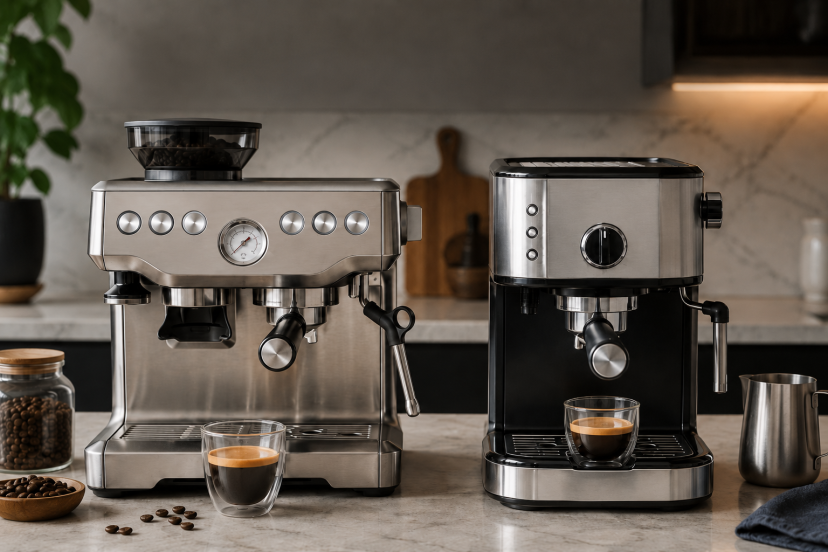
Breville machines typically have a stainless steel exterior with a clean, modern, and slightly industrial look. They often feel sturdy and substantial. Breville lays out the controls for easy use, with clear dials, pressure gauges, and steam wand placements that give the machine a professional feel.
De’Longhi leans into a more refined and polished European design. Many models feature curved lines, chrome accents, and a premium finish that looks impressive on any countertop. The build quality is solid, and the machines are designed to be visually appealing as much as functional. For those who care about kitchen aesthetics, De’Longhi often gets the edge in pure style.
Performance and Espresso Quality
Performance is where the two brands begin to diverge more meaningfully.
Breville machines are widely praised for their ability to produce consistent, high-quality espresso shots. Features like pre-infusion technology, PID temperature control, and 9-bar pressure systems give users the tools to pull café-quality shots at home. The learning curve is steeper, but the reward is a deeply satisfying cup with full control over the outcome.
De’Longhi’s fully automatic machines, especially from its Dinamica and Magnifica lines, deliver an impressive cup with minimal effort. The integrated conical burr grinders and automatic tamping systems produce reliable results, though some experienced home baristas find the level of customization limited compared to Breville. That said, the convenience factor is a genuine advantage for busy households.
Grinders and Grinding Options
Grinding is a critical component of great espresso, and this is one area where the two brands diverge sharply.
Many of Breville’s mid-to-high-range machines, such as the Barista Express and Barista Pro, come with built-in conical burr grinders with multiple grind size settings. This integrated approach is convenient and eliminates the need to purchase a separate grinder, which can be a significant additional cost. The grinders are well-regarded for their consistency and the range of adjustment they offer.
De’Longhi automatic machines also include built-in grinders. Models like the Magnifica Evo and Dinamica Plus offer generous bean hopper capacity and adjustable grind settings. However, De’Longhi focuses more on convenience than precision, so its grinders usually give users fewer fine-tuning options than Breville’s more adjustable systems.
For those who already own or plan to purchase a standalone grinder, Breville also offers grinder-free machines that pair well with premium external options.
Ease of Use
This is one of the most important factors for many buyers, and the two brands serve quite different audiences.
De’Longhi is the clear winner for ease of use. Its fully automatic machines handle virtually every step of the brewing process automatically. Users simply fill the water tank, add beans to the hopper, and press a button. The machine grinds, tamps, brews, and dispenses milk-based drinks with minimal interaction. For someone who wants a quick, quality espresso before rushing out the door, De’Longhi is hard to beat.
Breville machines, while not complicated, require more user involvement. Adjusting grind size, dose, extraction time, and steam pressure is part of the process. This is appealing to coffee hobbyists but can feel overwhelming to someone who just wants a simple morning routine.
Price Comparison
Both brands span a wide price range, making them accessible to different budgets.
Breville’s entry-level machines start around $300 to $400 with the Bambino and Bambino Plus models, which are compact, efficient, and well-regarded for their performance at the price point. Mid-range options like the Barista Express sit around $700 to $800, and flagship models like the Oracle Touch can exceed $2,000.
De’Longhi automatic machines also include built-in grinders. Models like the Magnifica Evo and Dinamica Plus offer generous bean hopper capacity and adjustable grind settings. However, De’Longhi focuses more on convenience than precision, so its grinders usually give users fewer fine-tuning options than Breville’s more adjustable systems.
At similar price points, Breville generally offers better manual control and precision, while De’Longhi offers better automation and convenience.
Maintenance and Durability
Long-term ownership involves more than just the initial purchase. Cleaning, descaling, and maintaining the machine are ongoing responsibilities that vary between brands.
De’Longhi’s automatic machines include automated cleaning and descaling alerts, making maintenance relatively painless. The machines walk users through cleaning cycles, which reduces the chance of buildup affecting performance over time.
Breville machines need a bit more hands-on maintenance, including regular group head backflushing and steam wand cleaning. However, users generally consider Breville’s components durable and repairable, and the company offers a strong support network.
Both brands carry limited warranties, typically ranging from one to two years depending on the model and region. Customer service experiences vary, but both brands have a solid reputation for standing behind their products.
Who Should Buy Breville?
Breville is the better choice for:
- Home baristas who enjoy learning and refining their espresso technique
- Coffee enthusiasts who want control over grind size, temperature, and pressure
- Those who prioritize espresso quality above all else
- Buyers who are comfortable with a learning curve in exchange for better customization
- Anyone interested in latte art who needs a powerful steam wand
Who Should Buy De’Longhi?
De’Longhi is the better choice for:
- Busy households that want high-quality coffee with minimal effort
- Users who prefer a one-touch experience without daily adjustments
- Those who value sleek, European-inspired design
- Coffee drinkers who enjoy a variety of drink styles, including cappuccinos and lattes, at the push of a button
- First-time espresso machine buyers who want something approachable
Conclusion
There is no universal winner in the Breville vs De’Longhi debate. Both brands produce outstanding espresso machines that are worthy of serious consideration. The right choice comes down to lifestyle, preferences, and what kind of coffee experience is most appealing.
For those who enjoy the craft of espresso-making and want the tools to perfect every shot, Breville is the stronger option. For those who prioritize convenience and want a machine that does the heavy lifting automatically, De’Longhi delivers a consistently satisfying cup without the fuss.
Both brands offer machines that can turn a daily coffee routine into something genuinely enjoyable.
Frequently Asked Questions
1. Is Breville or De’Longhi better for beginners?
De’Longhi is generally better for beginners due to its fully automatic machines that handle grinding, tamping, and brewing automatically. Breville machines offer more control but require a steeper learning curve.
2. Do Breville machines last longer than De’Longhi?
Both brands produce durable machines when users maintain them properly. Breville machines often stand out for their robust build quality, while De’Longhi’s automatic cleaning features help extend machine lifespan with less effort.
3. Which brand makes better milk-based drinks like lattes and cappuccinos?
Both brands perform well, but they take different approaches. Breville’s manual steam wands give users more control over milk texture, which many people prefer for latte art. De’Longhi’s automatic milk frothing systems are easier to use and produce consistent results without practice.
4. Are De’Longhi machines worth the price?
Yes, particularly for users who value convenience. De’Longhi’s mid-to-high range fully automatic machines deliver reliable quality with minimal daily effort, making them a worthwhile investment for many households.
5. Can Breville machines use pre-ground coffee?
Yes. Many Breville machines with built-in grinders also include a bypass doser that allows users to use pre-ground coffee. This feature is useful for those who enjoy specialty blends or coffee that requires grind settings the built-in grinder cannot achieve.