Cold Brew vs. Iced Coffee: Know the Difference

*We may earn a commission for purchases made using our links. Please see our disclosure to learn more.
Two cold coffee drinks dominate cafe menus and grocery store shelves every summer, yet most people use their names interchangeably. Cold brew and iced coffee are not the same thing. They differ in how they are made, how they taste, how much caffeine they contain, and how long they last. Understanding these differences can completely change how someone shops for, brews, and enjoys cold coffee at home.
Cold brew is made without heat, using a long steeping process that takes anywhere from 12 to 24 hours. Iced coffee, on the other hand, is simply hot-brewed coffee that has been chilled or poured directly over ice. These two methods produce dramatically different flavor profiles, strengths, and textures, despite both being served cold.
Whether the goal is a smooth, low-acid sip in the morning or a quick, bright pick-me-up in the afternoon, knowing which drink suits which moment makes all the difference. This guide breaks down everything worth knowing.
“The difference between cold brew and iced coffee is not just about temperature. It is about chemistry. Cold extraction preserves different compounds, resulting in a cup that is biologically distinct from its hot-brewed counterpart.”
– James Hoffmann, author of The World Atlas of Coffee
Key Takeaways
- Cold brew is made by steeping coarse ground coffee in cold or room-temperature water for 12 to 24 hours; no heat is involved.
- Iced coffee is brewed hot using standard methods, then cooled and poured over ice.
- Cold brew has a smoother, sweeter, and less acidic taste compared to iced coffee.
- Iced coffee tends to have a brighter, more vibrant flavor but can taste bitter or watered down as the ice melts.
- Cold brew concentrate can have significantly more caffeine per ounce than iced coffee, though serving size matters.
- Cold brew lasts up to two weeks in the refrigerator; iced coffee is best consumed the same day.
- Cost and convenience differ: iced coffee is faster and cheaper to make at home, while cold brew requires more planning.
Cold Brew vs Iced Coffee Recommended Products
Before diving deeper into the comparison, here are four products that make preparing both cold brew and iced coffee at home much easier.
1. Toddy Cold Brew System


The Toddy® Cold Brew System is a manual cold brew coffee maker designed for smooth, low-acid coffee at home. With a 1.8-liter capacity, it lets you prepare a generous batch of cold brew concentrate that can be stored and served over several days. Its simple white design and compact footprint make it easy to use on the counter while keeping the brewing process straightforward and mess-free.
A classic and widely trusted cold brew maker that uses a simple felt filter and plastic brewing container. It produces a smooth, low-acid concentrate that can be stored for up to two weeks. Ideal for those who want a no-fuss, reliable setup at home.
- Smooth Coffee: Helps create rich, low-acid cold brew concentrate.
- Large Capacity: The 1.8-liter size is ideal for batch brewing.
- Easy Manual Use: No electricity or complicated settings needed.
- Takes Time: Cold brew requires several hours of steeping.
- Manual Process: May not suit users who prefer automatic coffee makers.
- Storage Needed: The brewer and concentrate may take up fridge or counter space.
2. OXO Good Grips Cold Brew Coffee Maker
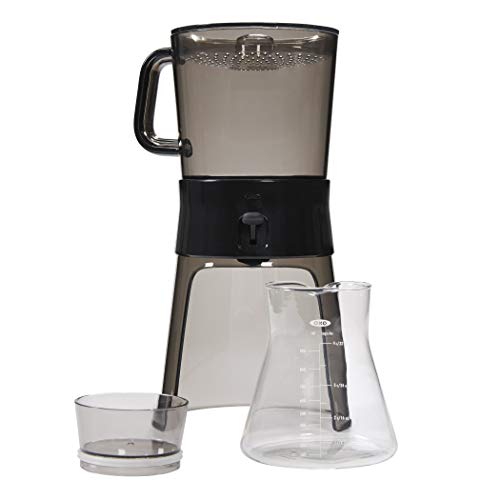


The OXO Good Grips Cold Brew Coffee Maker is a 32-ounce iced coffee maker designed to brew smooth, low-acid cold brew concentrate at home. Its overnight steep-and-release system makes the process simple, while the Rainmaker top helps distribute water evenly over the coffee grounds for balanced extraction. The included borosilicate glass carafe has clear measurement markings and stores easily in the refrigerator, making it practical for preparing multiple servings ahead of time.
This model features a rainmaker lid that evenly distributes water over the grounds, a fine mesh filter, and a smooth-pour tap. It holds up to 32 ounces of concentrate and sits neatly in most refrigerators. A great pick for daily cold brew drinkers.
- Even Extraction: The Rainmaker top helps saturate coffee grounds evenly for smoother flavor.
- Easy Brewing Control: The brew-release switch lets you start and stop filtration when needed.
- Reusable Filter: The stainless steel mesh filter is dishwasher safe and reduces the need for paper filters.
- Glass Carafe: The borosilicate carafe looks nice but still requires careful handling.
- Takes 12–24 Hours: It is not ideal for anyone who wants cold brew quickly.
- Counter Space: The taller design may take up more room while brewing.
3. Hario Mizudashi Cold Brew Coffee Pot


The Hario “Mizudashi” Cold Brew Coffee Pot is a compact 600ml cold brew maker designed for easy refrigerator storage and everyday iced coffee preparation. Made with glass and durable resin components, it offers a simple steeping method that lets you brew cold coffee directly in the pot. Its slim shape, reusable filter, and dishwasher-safe design make it a practical choice for anyone who wants cold brew at home without a large or complicated setup.
A sleek, Japanese-designed cold brew pitcher with a built-in mesh filter. It is compact, elegant, and easy to clean. Well-suited for those who prefer cold brew made directly in the refrigerator overnight without extra gear.
- Compact Size: The 600ml capacity is easy to store in the refrigerator.
- Easy Cleaning: Dishwasher-safe parts make cleanup more convenient.
- Simple Brewing: Great for making cold brew without an electric machine.
- Smaller Capacity: The 600ml size may not be enough for multiple heavy coffee drinkers.
- Glass Body: It needs careful handling to avoid chips or breakage.
- Basic Features: It does not offer extra controls like a brew-release switch.
4. Takeya Patented Deluxe Cold Brew Coffee Maker

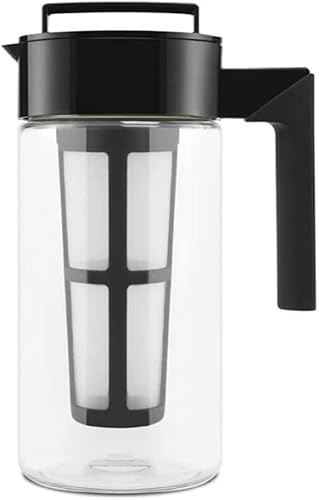
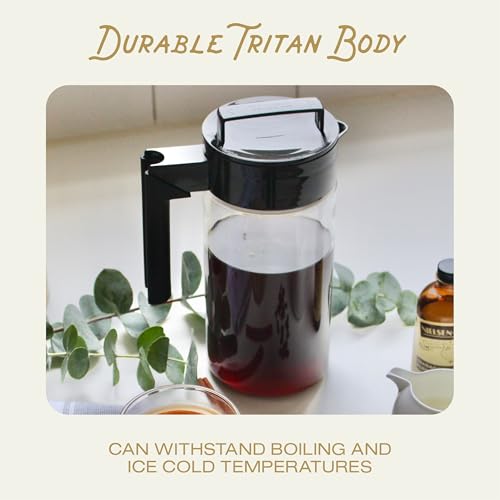
The Takeya Deluxe Cold Brew Coffee Maker is a 1-quart cold brew pitcher designed for smooth, less acidic coffee at home. Made from BPA-free Tritan, it is shatter-proof, stain-resistant, and odor-resistant, making it a durable option for daily use. Its fine-mesh filter helps keep grounds out of the coffee, while the airtight, leakproof lid helps preserve freshness and makes the pitcher easier to store in the refrigerator.
An airtight, BPA-free pitcher with a fine mesh brew-core filter and a comfortable non-slip handle. It brews directly in the refrigerator and is available in multiple sizes. One of the most popular and well-reviewed cold brew makers available on Amazon.
- Durable Design: The shatter-proof Tritan pitcher is made for everyday use.
- Airtight Lid: Helps keep cold brew fresh and reduces the risk of spills.
- Easy Storage: The compact 1-quart size fits most refrigerator doors.
- Smaller Batch Size: The 1-quart capacity may not be enough for larger households.
- Plastic Pitcher: Some users may prefer glass over Tritan plastic.
- Manual Brewing: It still requires steeping time and cleanup after use.
What Is Cold Brew Coffee?
Cold brew coffee is made by combining coarsely ground coffee with cold or room-temperature water and allowing it to steep for an extended period, usually between 12 and 24 hours. The result is a concentrated coffee liquid that is either consumed as-is or diluted with water, milk, or a milk alternative before serving.
Because no heat is used, the extraction process works differently than traditional brewing. Heat speeds up the release of acids and oils from coffee grounds. Without it, cold brew develops a naturally smoother, slightly sweeter flavor with noticeably less acidity. Many people who experience discomfort from regular coffee find cold brew much easier on the stomach.
The typical cold brew ratio is around one part coarse coffee grounds to four parts water, though some prefer a stronger concentrate at a 1:2 ratio. After steeping, the grounds are filtered out using a fine mesh, cheesecloth, or specialized filter, and the resulting liquid can be stored in the refrigerator for up to two weeks.
Cold brew is often sold as a concentrate in stores, which is meant to be diluted before drinking. When consumed straight, the caffeine content can be quite high. It is worth paying attention to serving sizes and dilution levels, particularly for those who are sensitive to caffeine.
What Is Iced Coffee?
Iced coffee is exactly what it sounds like: coffee that has been brewed hot and then chilled, either by letting it cool at room temperature, refrigerating it, or brewing it directly over ice. Drip coffee, pour-over, and espresso are all common bases for iced coffee.
The most common method involves brewing a double-strength batch of hot coffee and then pouring it over a full glass of ice. The extra concentration compensates for the dilution that happens as the ice melts. When done well, iced coffee retains the bright, lively flavors of hot-brewed coffee but in a refreshing cold format.
One important distinction worth noting is that iced coffee is not the same as cold coffee left sitting on a countertop. Fresh-brewed iced coffee, made intentionally with proper ratios, is a much better experience than simply refrigerating leftover morning coffee.
Iced coffee is fast to make and requires no special equipment beyond a standard coffee maker. It can be ready in minutes, which makes it the go-to choice for spontaneous cold coffee cravings.
Flavor Differences: Smooth vs. Bright
Flavor is where cold brew and iced coffee diverge most noticeably. Cold brew tends to be mellow, chocolatey, and subtly sweet even without added sugar. The absence of heat means fewer bitter compounds are extracted, and the long steeping process allows for a fuller, rounder body.
Iced coffee, by contrast, carries more of the acidic and aromatic qualities associated with hot coffee. Depending on the beans and brewing method used, it can be fruity, floral, bright, or bold. For specialty coffee lovers who appreciate the nuanced flavors of single-origin beans, iced coffee often showcases those qualities better than cold brew does.
The trade-off is stability. As ice melts in a glass of iced coffee, the drink becomes more diluted and its flavors fade. Cold brew, served over ice, holds up much longer because it starts as a concentrate that continues to taste good even as it dilutes slightly.
Caffeine Content: Which One Is Stronger?
This is a common point of confusion. Cold brew concentrate can contain more caffeine per ounce than regular drip coffee, but the actual caffeine in a finished serving depends heavily on dilution.
A typical 16-ounce serving of cold brew from a cafe contains roughly 200 to 300 milligrams of caffeine. A comparable serving of iced coffee made from drip coffee contains around 120 to 180 milligrams. However, if the cold brew concentrate is diluted 1:1 with water or milk before serving, the caffeine per cup drops significantly.
Espresso-based iced drinks, like an iced Americano or iced latte, will have caffeine levels consistent with the number of espresso shots used, typically 63 to 126 milligrams for one to two shots.
The bottom line: cold brew has the potential to be stronger, but it depends entirely on how it is prepared and served.
Acidity and Digestibility
One of the most frequently cited benefits of cold brew is its lower acidity compared to hot-brewed coffee. Because heat drives the extraction of acids from coffee grounds, cold brew naturally contains fewer acidic compounds. Studies and anecdotal reports suggest that cold brew can have a pH closer to neutral than hot coffee, making it gentler on the stomach and tooth enamel.
For people who experience acid reflux, heartburn, or general stomach sensitivity from regular coffee, cold brew is often recommended as a more comfortable alternative. This does not mean cold brew is entirely acid-free, but the difference is meaningful enough that many people notice it.
Iced coffee, being hot-brewed coffee that has simply been cooled, retains the same acidity as its hot counterpart. For those with sensitive stomachs, this can be a deciding factor when choosing between the two.
Cost and Convenience
Iced coffee wins on convenience. It takes minutes to make, requires no advance planning, and uses whatever coffee and equipment is already on hand. A batch can be brewed and poured over ice in the time it takes to boil water.
Cold brew requires patience. The minimum steeping time is typically 12 hours, though many recipes recommend 18 to 24 hours for the best results. However, once a batch is made, it stays fresh for up to two weeks in the refrigerator, which makes it easy to have cold coffee ready at any moment throughout the week.
In terms of cost, iced coffee is generally cheaper to make at home because it uses less ground coffee per serving. Cold brew requires a higher coffee-to-water ratio, which means going through beans faster. That said, the ability to make large batches that last two weeks can offset some of that cost.
Which One Should You Choose?
The right choice depends entirely on personal preference and lifestyle. Here is a simple breakdown:
Choose cold brew if the goal is a smooth, low-acid, long-lasting cold coffee that can be made in bulk and stored throughout the week. It is ideal for those with sensitive stomachs, those who prefer sweeter flavors without added sugar, and anyone who likes planning ahead.
Choose iced coffee if the goal is a bright, flavorful cup that can be made quickly and enjoyed right away. It is great for those who love the nuanced flavors of specialty beans and prefer the familiar taste of freshly brewed coffee in a cold format.
There is no wrong answer. Many coffee drinkers keep both options in rotation, choosing between them based on mood, time, and occasion.
Conclusion
Cold brew and iced coffee may look similar in a glass, but they are fundamentally different beverages. From the brewing process and flavor profile to caffeine content and shelf life, each has its own strengths and ideal use cases. Cold brew offers smoothness, low acidity, and longevity, while iced coffee delivers speed, brightness, and versatility.
Understanding the difference empowers better choices at the cafe and at home. Whether someone is investing in a cold brew maker for weekly batch prep or simply improving the morning iced coffee routine, knowing what goes into the cup makes the experience that much better.
Frequently Asked Questions
1. Can cold brew be made with any type of coffee bean?
Yes. Any coffee bean can be used to make cold brew, though medium to dark roasts are most commonly recommended because they produce a rich, smooth concentrate. Light roasts can also work well and tend to highlight fruity or floral notes in the final cup.
2. Does cold brew have more caffeine than iced coffee?
Cold brew concentrate can have a higher caffeine concentration per ounce than iced coffee, but the amount of caffeine in a finished drink depends on how much it is diluted. A properly diluted serving of cold brew may have similar or only slightly more caffeine than a serving of iced coffee.
3. Why does iced coffee taste watered down?
Iced coffee tastes diluted when it is not brewed at a stronger concentration to begin with. As ice melts, it adds water to the drink. Brewing a double-strength batch before pouring over ice helps prevent this problem.
4. How long does cold brew last in the refrigerator?
Cold brew concentrate stored in an airtight container in the refrigerator stays fresh for up to two weeks. Diluted cold brew is best consumed within a few days as the flavors begin to degrade more quickly once water or milk has been added.
5. Is it possible to heat cold brew and drink it hot?
Yes. Cold brew concentrate can be warmed up and consumed as a hot drink. Many people enjoy it this way, particularly because the smooth, low-acid profile of cold brew translates well to a hot cup. Simply dilute the concentrate with hot water instead of cold water or milk.