Best Water for Coffee: A Complete Guide
*We may earn a commission for purchases made using our links. Please see our disclosure to learn more.
The best water for making coffee is clean, fresh, free from noticeable chlorine or odors, and moderately mineralized. For most home brewers, filtered tap water is the easiest option. Coffee enthusiasts seeking greater consistency can use distilled or reverse-osmosis water that has been remineralized specifically for coffee.
Water may seem less important than the beans, grinder, or brewer, but it makes up most of the finished drink. Its mineral content affects how efficiently flavor compounds are extracted from ground coffee. Water can bring out sweetness, acidity, aroma, and body, or make the same beans taste flat, bitter, sour, chalky, or dull.
The ideal choice is not necessarily the purest water available. Completely mineral-free water often produces weak or unbalanced coffee because calcium and magnesium help extract desirable compounds. At the opposite extreme, very hard water may mute delicate flavors, increase bitterness, and leave scale inside kettles and coffee machines.
Understanding a few basic water characteristics can therefore improve every brewing method, from drip coffee and pour-over to French press, AeroPress, cold brew, and espresso.
“Most people prefer coffee made with soft water.”
— Birgit Kohler, Head of Organoleptic Department, quoted by the Specialty Coffee Association
Key Takeaways
- The best coffee water is clean, odorless, chlorine-free, and moderately mineralized.
- Filtered tap water is the most practical choice when the local supply is safe and not excessively hard.
- A useful starting target is approximately 75 to 250 parts per million of total dissolved solids, with about 150 ppm commonly used as a reference point.
- Calcium and magnesium support extraction, while alkalinity controls how strongly acidity appears in the cup.
- Distilled and reverse-osmosis water should generally be remineralized before brewing.
- Hard water can flatten flavors and create limescale inside coffee equipment.
- Water that is too soft may produce sharp, thin, sour, or underdeveloped coffee.
- Mineral packets provide the greatest consistency because they allow brewers to start with nearly mineral-free water and create a repeatable profile.
Best Water Products for Better Coffee
Availability, packaging, seller, and price may change. Check the current Amazon listing before ordering.
1. Third Wave Water Classic Light Roast Profile


Third Wave Water Classic Light Roast Profile helps create mineral-balanced brewing water for more consistent, flavorful coffee. Each packet is mixed with one gallon of distilled or reverse-osmosis water, and the 12-pack produces up to 12 gallons. Its blend includes magnesium to support sweetness and calcium to promote balanced body, while the low-alkalinity profile helps preserve the natural acidity of light- and medium-roast beans. It works with pour-over brewers, French presses, drip coffee makers, Moka pots, percolators, and other common brewing systems.
- Improved Flavor: The mineral blend can enhance sweetness, acidity, clarity, and body.
- Easy Preparation: Each premeasured stick treats one gallon of distilled or reverse-osmosis water.
- Versatile Use: Suitable for several brewing methods and coffee machines.
- Requires Pure Water: It should be mixed with distilled or reverse-osmosis water rather than regular tap water.
- Ongoing Cost: Regular users must continue purchasing both mineral packets and suitable base water.
- Light-Roast Focus: The low-alkalinity profile may not be ideal for every dark roast or espresso preference.
Best overall for consistent specialty coffee
Third Wave Water packets are designed to be mixed with the specified amount of distilled or reverse-osmosis water. The Classic Light Roast Profile contains minerals intended to support clarity, brightness, sweetness, and body in light- to medium-roasted coffee.
The Amazon package commonly produces 12 gallons, with one packet used per gallon. The manufacturer identifies magnesium and calcium as important components of the blend.
This is a practical option for pour-over drinkers who want consistent results without measuring individual mineral concentrates. It is also useful for comparing coffees because water remains controlled from one brew to the next.
Recommended for: V60, Chemex, AeroPress, automatic drip and light-roast coffee.
Keep in mind: Use the exact amount of pure water stated on the package. Adding a packet to ordinary mineralized tap water can create an overly concentrated profile.
2. COFFEE WATER Mineral Packs


COFFEE WATER Mineral Packs are designed to turn distilled or reverse-osmosis water into mineral-balanced brewing water. The 25-gallon package includes premeasured mineral packets that help create more consistent extraction and flavor without requiring users to measure individual minerals. The prepared water can be used for pour-over, drip coffee, French press, AeroPress, cold brew, and espresso.
- Large Yield: The package makes up to 25 gallons of coffee brewing water.
- Simple Preparation: Premeasured packs remove the need to calculate individual mineral ratios.
- Broad Compatibility: Suitable for several coffee brewing methods and machines.
- Requires Base Water: The packets must be added to distilled or reverse-osmosis water.
- Extra Preparation: Users need to mix and store the treated water before brewing.
- Limited Customization: The fixed mineral profile may not suit every roast or personal taste.
Best straightforward alternative mineral packet
COFFEE WATER mineral packs are also intended for distilled or reverse-osmosis water. The product is formulated as an all-purpose profile for pour-over, automatic coffee makers, and espresso.
Its main advantage is simplicity. Rather than testing and adjusting calcium, magnesium, and bicarbonate separately, users add one packet to the recommended water volume.
This product may suit brewers who want one general mineral profile rather than separate formulas for different roast levels.
Recommended for: Households using several brewing methods.
Keep in mind: One universal profile may not emphasize the characteristics of every coffee equally. Enthusiasts may eventually prefer separate profiles for light roast, dark roast, and espresso.
3. Brita Everyday Pitcher With Elite Filter
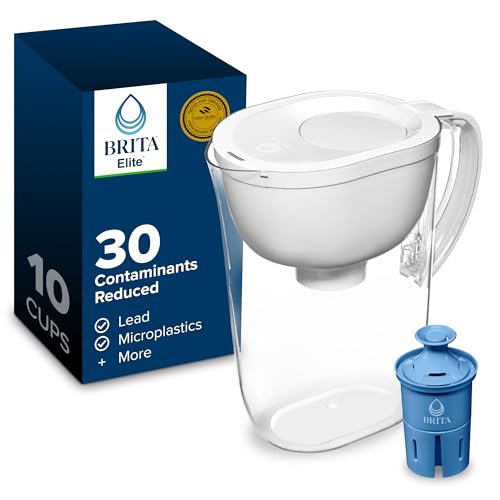


The Brita Everyday Water Pitcher is a convenient countertop filtration option for households that want better-tasting water for daily coffee brewing. Its 10-cup capacity provides enough water for several servings, while the included Elite filter uses activated carbon filtration to reduce chlorine taste and odor along with contaminants such as lead, mercury, cadmium, benzene, and asbestos.
- Improves Water Taste: Reduces chlorine taste and odor that can negatively affect brewed coffee.
- Large Capacity: The 10-cup pitcher holds enough water for multiple cups or a full drip-coffee batch.
- Long Filter Life: The Elite filter generally requires replacement only about twice per year.
- Limited Hardness Reduction: It may not remove enough calcium and magnesium to prevent scale in hard-water areas.
- Slow Filtration: Filling the pitcher can take time when preparing a large amount of brewing water.
- Requires Filter Replacements: Ongoing use involves purchasing compatible Elite replacement filters.
Best for convenient daily filtered tap water
A Brita pitcher fitted with an Elite filter is a convenient choice when municipal water tastes or smells of chlorine but is not excessively hard.
Brita states that its Elite filter reduces chlorine taste and odor as well as a range of other contaminants, including lead. It is designed to retain useful minerals rather than producing distilled-style water.
For coffee, its greatest benefit is convenience. Fill the pitcher, refrigerate or store it as directed, and use the filtered water for a drip machine, kettle, or French press.
Recommended for: Beginners, renters, daily coffee drinkers and households with acceptable tap-water hardness.
Keep in mind: This is not a complete solution for very hard water. A pitcher filter may improve flavor while leaving enough hardness to create scale.
4. BWT Bestsave M Limescale Protection Pad

The BWT Bestsave M is an in-tank filtration pad designed to reduce limescale in coffee and espresso machines. It sits directly inside the machine’s water reservoir and treats the water before it moves through the brewing system.
- Limescale Protection: Helps reduce mineral buildup inside compatible coffee and espresso machines.
- Simple Installation: Sits directly in the water tank without requiring plumbing or permanent equipment.
- Useful Capacity: Treats up to 100 liters or lasts for roughly two months under suitable conditions.
- Machine Compatibility: Only works with coffee or espresso machines that have an accessible water reservoir.
- Regular Replacement: The pad must be replaced when its capacity or service period is reached.
- Variable Performance: Actual lifespan depends on local water hardness and daily water consumption.
Best for protecting tank-based coffee and espresso machines
The BWT Bestsave M is placed directly inside the water reservoir of a compatible coffee or espresso machine. It is designed to reduce scale-forming minerals and protect equipment.
Unlike a countertop pitcher, the pad treats water inside the appliance. That makes it appealing for machines with removable tanks, especially in areas where moderate hardness creates recurring limescale.
The manufacturer recommends replacing the filter according to its capacity and service-life instructions. Capacity depends partly on the hardness of the incoming water.
Recommended for: Automatic coffee machines and compatible home espresso machines with water tanks.
Keep in mind: Confirm that the product is appropriate for your machine and incoming water. Espresso-machine manufacturers may specify their own hardness, alkalinity, or filtration requirements.
Why Water Makes Such a Difference in Coffee
Brewing coffee is a process of dissolving compounds from roasted and ground beans into water. Hundreds of aromatic and flavor-producing compounds contribute to a finished cup, but they do not all dissolve at the same rate.
Water chemistry influences what is extracted and how those compounds are perceived. Magnesium is often associated with efficient extraction and clearer fruit or floral characteristics. Calcium can contribute to extraction, body, and a rounder mouthfeel. Bicarbonate provides alkalinity, which buffers coffee’s natural acids.
The objective is balance.
Water with too little mineral content may struggle to extract enough flavor, resulting in a cup that seems thin, sharp, hollow, or sour. Water with excessive hardness or alkalinity may suppress acidity and create a flat, chalky, bitter, or muted cup.
Water also affects consistency. A brewing recipe may work perfectly in one city but taste noticeably different elsewhere because municipal water profiles vary. Mineral levels can even change seasonally within the same location.
Before replacing your grinder, changing your coffee-to-water ratio, or buying a new brewer, try making the same recipe with a different water source. The difference can be surprisingly clear.
What Is the Ideal Water for Coffee?
The Specialty Coffee Association has historically provided useful reference ranges for brewing water. Commonly cited targets include:
| Water characteristic | Useful reference point |
|---|---|
| Total dissolved solids | About 150 ppm |
| Acceptable TDS range | Approximately 75–250 ppm |
| Total alkalinity | Around 40 ppm as calcium carbonate |
| Calcium hardness | Around 68 ppm as calcium carbonate |
| Acceptable pH | Approximately 6.5–7.5 |
| Chlorine | None detectable |
| Appearance | Clear |
| Odor | Clean and neutral |
These numbers should be treated as starting points rather than an unbreakable recipe. The best profile may vary with the coffee, roast level, brewing method, and personal preference.
A bright, lightly roasted Ethiopian coffee may taste more expressive with relatively soft water and modest alkalinity. A darker roast may benefit from a profile that softens bitterness and prevents the cup from becoming overly heavy. Espresso also requires consideration of equipment safety because scale can damage boilers, valves, and heating elements.
Total Dissolved Solids
Total dissolved solids, usually abbreviated as TDS, describes the combined concentration of dissolved substances in water. A handheld meter expresses the result in parts per million.
TDS provides a useful overview but does not reveal which minerals are present. Two samples can both measure 150 ppm while behaving very differently during extraction. One may contain a suitable balance of calcium, magnesium, and bicarbonate, while another may contain high sodium, chloride, or other substances that do not produce the same flavor.
Use TDS as a screening tool, not a complete description of water quality.
Hardness
Water hardness is mainly associated with calcium and magnesium. Some hardness is helpful for coffee extraction, but excessive hardness creates two problems.
First, highly mineralized water can make coffee taste heavy, dull, chalky, or bitter. Second, it creates limescale when heated. This pale mineral deposit can build up inside kettles, drip machines, and espresso boilers, restricting water flow and reducing heating efficiency.
If a kettle quickly develops a white crust, the local water is probably harder than ideal for coffee equipment.
Alkalinity
Alkalinity describes the water’s ability to neutralize acids. In most drinking water, bicarbonate is the primary contributor.
Coffee naturally contains acids that create brightness and complexity. A moderate level of alkalinity keeps those acids balanced. Excessive alkalinity neutralizes too much acidity, making the cup taste flat or lifeless. Very low alkalinity allows acidity to seem aggressive, sharp, or sour.
This is why hardness alone does not determine whether water is good for brewing. Hardness and alkalinity must work together.
pH
Neutral water has a pH near 7. Coffee water is generally suitable when it is close to neutral, commonly within a range of approximately 6.5 to 7.5.
However, pH by itself does not explain how the water will interact with coffee. Alkalinity is usually more useful because it measures buffering capacity rather than acidity at one moment.
Chlorine and Chloramine
Municipal utilities disinfect water to keep it microbiologically safe. Chlorine can create medicinal, chemical, or swimming-pool-like flavors in brewed coffee, even when the tap water seems acceptable on its own.
Activated carbon filters commonly reduce chlorine taste and odor. Chloramine can be more difficult to remove, so households served by chloraminated water should check whether a particular filter is certified or specifically designed to reduce it.
Best Types of Water for Making Coffee
1. Filtered Tap Water
Filtered tap water is the best starting point for most households. It is affordable, convenient, and may retain enough calcium and magnesium for extraction while reducing chlorine, odors, and certain contaminants.
A standard carbon pitcher is most useful when the tap water already has reasonable mineral content but suffers from noticeable chlorine or an unpleasant taste.
Filtration has limitations. Many pitcher filters improve taste without substantially lowering hardness or TDS. If the water is extremely hard, a basic carbon filter may not prevent scale. Testing the water before choosing a filtration system is therefore worthwhile.
Best for: Everyday drip coffee, French press, AeroPress and pour-over.
Potential drawback: Results depend on the original tap-water profile.
2. Bottled Spring Water
Bottled spring water can produce excellent coffee when its mineral composition is suitable. Look at the mineral analysis on the label or the producer’s website rather than choosing solely by brand recognition.
A good spring water should taste clean and have moderate mineral content. Avoid water described as highly mineralized, especially when calcium, bicarbonate, or sodium levels are very high.
Bottled water can be helpful while traveling or when local tap water has severe taste problems. However, it is more expensive than filtration and creates additional packaging waste.
Best for: Travel, occasional brewing, or testing whether water is causing flavor problems.
Potential drawback: Mineral profiles vary considerably among brands.
3. Distilled Water With Added Minerals
Distillation removes nearly all dissolved minerals and creates a predictable blank base. Distilled water alone is generally not the best choice for brewing because it lacks the minerals needed for balanced extraction.
Its strength is consistency. Add a measured coffee-water mineral packet, and the resulting profile can be reproduced every time.
This approach is particularly useful for specialty coffee, comparative tastings, and households with extremely hard or inconsistent tap water.
Best for: Pour-over enthusiasts, coffee tasting, competitions and recipe consistency.
Potential drawback: Requires an additional mineral product and mixing step.
4. Reverse-Osmosis Water With Added Minerals
Reverse osmosis removes a large portion of minerals, salts, and other dissolved substances. Like distilled water, untreated reverse-osmosis water may be too empty for flavorful coffee.
Some household RO systems include a remineralization stage. Alternatively, users can add coffee-specific mineral packets after filtration.
Because RO systems differ in efficiency, measure the finished water rather than assuming it contains zero minerals. A packet designed for one gallon of zero-TDS water may create a stronger-than-intended profile when added to partially mineralized water.
Best for: Households with problematic water and people who want control over mineral content.
Potential drawback: Installation expense and possible need for remineralization.
5. Softened Water
Conventional household water softeners usually exchange calcium and magnesium for sodium or potassium. This helps prevent scale in plumbing but does not necessarily create ideal coffee water.
Softened water can taste different, and its mineral balance may not support extraction as effectively as naturally soft or properly filtered water. Avoid using heavily softened water by default unless testing shows that it produces a flavor you enjoy.
Best for: Not generally the first recommendation for specialty coffee.
Potential drawback: Reduced extraction minerals and potentially elevated sodium.
Which Product Should You Choose?
Choose Third Wave Water when flavor consistency and light-roast clarity are your priorities.
Choose COFFEE WATER Mineral Packs when you want a simple, general-purpose remineralization product for several brewing methods.
Choose a Brita Everyday Pitcher with an Elite filter when the tap water has reasonable mineral content but noticeable chlorine or unpleasant odors.
Choose the BWT Bestsave M when reducing limescale inside a compatible tank-based coffee machine is the main concern.
For many households, the most effective first step is a filtered-water pitcher. Mineral packets become more valuable when the local tap water is extremely hard, unusually soft, inconsistent, or unpleasant even after carbon filtration.
How to Test Your Water at Home
Start by checking the annual water-quality report provided by your local utility. It may list hardness, alkalinity, pH, sodium, chloride, and disinfectant type.
A handheld TDS meter can provide a quick measurement of dissolved solids. Remember that it cannot identify individual minerals.
For more useful detail, purchase aquarium-style general hardness and carbonate hardness test drops. These can estimate:
- GH or general hardness: Primarily calcium and magnesium
- KH or carbonate hardness: A practical estimate related to alkalinity
You can also conduct a simple taste comparison:
- Brew one coffee with tap water.
- Brew the same recipe with filtered tap water.
- Brew a third batch with remineralized distilled water.
- Keep the coffee dose, grind, temperature, ratio, and brewing time unchanged.
- Taste the cups after they have cooled slightly.
Look for differences in sweetness, aroma, acidity, bitterness, body, dryness, and aftertaste. The best water is the one that produces a balanced cup while remaining safe for your equipment.
How Water Changes Different Brewing Methods
Pour-Over
Pour-over brewing tends to reveal water differences clearly. Water with moderate hardness and controlled alkalinity can emphasize floral, fruity, and citrus notes. Excessive alkalinity may make a delicate coffee taste muted.
Drip Coffee
Automatic drip machines perform well with clean filtered water. Since these machines are used frequently, scale prevention is important. Follow the manufacturer’s descaling schedule even when using filtered water.
French Press
French press coffee naturally has more body and sediment. Moderately mineralized water can support sweetness and texture, but very hard water may make the brew feel heavy or chalky.
Cold Brew
Cold water extracts coffee more slowly than hot water. Clean flavor remains important because chlorine and mineral tastes can become noticeable in a concentrated brew. Filtered or properly remineralized water works well.
Espresso
Espresso water must balance flavor with machine protection. Water that is too hard creates scale, while extremely low-mineral or improperly balanced water can contribute to corrosion in certain machines. Always review the manufacturer’s water specifications before filling an espresso machine.
Common Water Mistakes to Avoid
Using Distilled Water Without Minerals
Pure distilled water offers consistency but often lacks the mineral content required for balanced extraction. Use it as a base for a coffee-water mineral formula.
Assuming Bottled Water Is Automatically Better
Some bottled waters are too mineral-heavy for coffee. Read the mineral analysis and compare several options.
Judging Water Only by TDS
TDS does not identify mineral composition. Combine it with hardness, alkalinity, and taste information.
Ignoring Chlorine
A faint chlorine smell in plain water can become a distracting medicinal note in brewed coffee.
Forgetting About Equipment Scale
Water can taste acceptable while still creating damaging scale. Inspect kettles and follow the cleaning guidance for your brewer.
Adding Mineral Packets to Tap Water
Most coffee-water packets are formulated for distilled or nearly mineral-free water. Mixing them with tap or spring water can produce excessive mineral concentration.
Final Verdict
For most people, the best water for making coffee is fresh, cold, filtered tap water with no noticeable chlorine and a moderate level of hardness. It is inexpensive, convenient, and usually retains enough calcium and magnesium to support extraction.
For greater precision, use distilled or reverse-osmosis water with a measured mineral packet. This method provides consistent water regardless of location or seasonal changes in the municipal supply.
Avoid thinking of water as a neutral background ingredient. Its mineral content affects sweetness, clarity, acidity, body, bitterness, equipment condition, and the repeatability of every recipe. Better water will not fix stale beans or an uneven grinder, but it can reveal flavors that poor water was hiding.
Frequently Asked Questions
1. Is tap water good for making coffee?
Tap water can be excellent for coffee when it is safe to drink, tastes clean, contains moderate minerals, and has no noticeable chlorine odor. If the water tastes unpleasant on its own, it will probably affect the coffee. A carbon filter is a practical first step.
2. Can I use distilled water to make coffee?
Distilled water can be used, but it usually works best after remineralization. Because distillation removes nearly all minerals, plain distilled water may produce coffee that tastes thin, sharp, weak, or unbalanced. Coffee-specific mineral packets provide an easy way to add controlled hardness and alkalinity.
3. Is spring water or purified water better for coffee?
Spring water may be better when it has a moderate, balanced mineral profile. Purified water varies: some products retain minerals, while distilled or reverse-osmosis purified water may contain almost none. Check the label and mineral analysis instead of relying only on terms such as “spring” or “purified.”
4. What TDS is best for coffee water?
Approximately 150 ppm is a widely used reference point, while a broader range of about 75 to 250 ppm is commonly cited. TDS alone cannot determine whether water is ideal because it does not identify the dissolved substances. Hardness, alkalinity, chlorine, sodium, and overall taste also matter.
5. Does filtered water prevent scale in a coffee maker?
Not always. Activated carbon filters can reduce chlorine and improve taste without removing much calcium or magnesium. If the incoming water is hard, scale may still form. Use hardness test strips or drops, descale the machine as recommended, and consider a filter specifically designed for hardness reduction when necessary.