How to Pull Espresso Shots: Complete Step-by-Step Guide
*We may earn a commission for purchases made using our links. Please see our disclosure to learn more.
Pulling a great espresso shot at home can feel intimidating, especially when your coffee comes out sour, bitter, watery, or barely drips from the machine. Fortunately, learning how to pull espresso shots is more about understanding a few basic techniques than mastering complicated equipment.
A well-pulled espresso shot should have a satisfying balance of sweetness, acidity, and bitterness, with a rich body and pleasant finish. Achieving that balance requires the right coffee grind, accurate measurements, consistent tamping, and controlled extraction.
Whether you’re using an entry-level espresso machine or upgrading your home coffee setup, this guide explains how to pull espresso shots step by step, troubleshoot common problems, and improve your brewing technique.
“Our research suggests that the average barista uses a 1:2 brew ratio.”
— Specialty Coffee Association
Key Takeaways
- Start with 18 grams of finely ground coffee and aim for approximately 36 grams of espresso.
- A typical double espresso shot takes around 25–30 seconds, although flavor matters more than hitting an exact time.
- Use an espresso-capable burr grinder for consistent grind size and better extraction control.
- Distribute coffee grounds evenly and tamp level before brewing.
- Adjust grind size based on shot speed and taste, changing one variable at a time.
- Weigh the finished espresso rather than relying only on visual appearance.
Four Recommended Products for Pulling Better Espresso Shots
Having reliable equipment makes espresso preparation easier, particularly when you’re trying to repeat the same brewing recipe every morning.
These four products address different parts of the espresso-making process.
1. Breville Bambino Plus Espresso Machine


The Breville Bambino Plus BES500BSS is designed for coffee lovers who want barista-quality espresso at home without the bulk. Featuring a compact design and powerful performance, this machine heats up in just 3 seconds, ensuring fast and precise espresso extraction. The automatic steam wand creates silky microfoam for lattes and cappuccinos, while the PID temperature control ensures optimal flavor. Whether you're a beginner or an experienced home barista, the Bambino Plus delivers café-quality coffee in a small footprint.
- Fast Heating: ThermoJet heating system reaches optimal temperature in just 3 seconds.
- Compact & Stylish: Slim 7.7-inch width fits easily on countertops without taking up space.
- Automatic Milk Frothing: Steam wand delivers barista-quality microfoam for lattes and cappuccinos.
- No Built-in Grinder: Requires a separate coffee grinder for fresh espresso shots.
- Limited Customization: Lacks advanced settings for fine-tuning espresso extraction.
- Small Water Tank: 64 oz capacity may require frequent refilling for heavy users.
Best for: Beginners who want a compact espresso machine
The Breville Bambino Plus combines a compact design with features that make home espresso preparation more approachable.
Its ThermoJet heating system heats rapidly, while low-pressure pre-infusion and approximately 9-bar extraction support controlled brewing.
The machine uses a 54mm portafilter and includes programmable shot controls. Its automatic milk-texturing feature is particularly helpful for preparing lattes and cappuccinos.
Why consider it: It offers accessible controls without eliminating the opportunity to practice proper dosing, grinding, and extraction.
2. Baratza Encore ESP Coffee Grinder


The Baratza Encore Coffee Grinder ZCG485BLK is a top-rated, entry-level grinder designed for coffee enthusiasts who want to elevate their home brewing experience. With 40 grind settings, it allows you to experiment with various brewing methods, from espresso to French press. This grinder’s 40mm commercial-grade conical burrs provide a consistent grind, ensuring uniform extraction for each cup. Its user-friendly design includes a convenient pulse button and a simple ON/OFF switch, making grinding fresh coffee effortless. Built to last with durable alloy steel burrs and a powerful DC motor, the Encore delivers quality grind after grind. With its compact footprint and sleek black design, this grinder is a reliable choice for coffee lovers at all levels. Backed by Baratza’s world-class support and a 1-year warranty, the Encore offers peace of mind and long-lasting performance.
- Versatile grind settings: 40 different grind options for various brewing methods like espresso, Aeropress, and French press.
- Durable construction: Made with hardened alloy steel burrs and a powerful motor for consistent, long-lasting performance.
- Compact design: Its small footprint fits easily in kitchens with limited space.
- Larger capacity models available: The 5-ounce capacity may be too small for heavy coffee drinkers.
- No programmable features: Lacks advanced features like timer settings for more precise control.
- Noisy operation: The grinder can be a bit loud, especially at higher settings.
Best for: Adjusting espresso grind size
The Baratza Encore ESP is designed for coffee drinkers who need more precise grind adjustments than a typical all-purpose grinder provides.
Its settings 1–20 are dedicated to espresso, while settings 21–40 accommodate other brewing methods.
The burr grinding system and adjustable settings make it practical for experimenting with shot timing and flavor.
Why consider it: An espresso-focused grinder helps you make controlled adjustments when dialing in different coffee beans.
3. Normcore V4 53.3mm Spring-Loaded Tamper


The Normcore V4 53.3mm Espresso Tamper is designed to deliver consistent, level tamping for better espresso preparation. Compatible with Breville and Sage 54mm portafilters, it features a spring-loaded mechanism with three interchangeable springs for different tamping pressures. Its titanium PVD-coated flat base offers durability and corrosion resistance, while the genuine American walnut handle provides a comfortable grip. The self-leveling design helps reduce uneven tamping and supports more consistent espresso extraction.
- Consistent Tamping: Spring-loaded design helps maintain even pressure.
- Premium Materials: Titanium PVD coating and genuine walnut handle.
- Self-Leveling: Helps minimize uneven tamping and channeling.
- Higher Price: More expensive than basic manual tampers.
- Limited Compatibility: 53.3mm model fits select 54mm portafilters.
- Manual Adjustments: Changing tamping pressure requires swapping springs.
Best for: More consistent tamping
The Normcore V4 uses a spring-loaded mechanism and a leveling design to help maintain consistent tamping pressure and alignment.
Its interchangeable springs allow different preset tamping forces.
The 53.3mm version is designed for compatible 54mm baskets, including many Breville models.
Why consider it: It reduces variation in tamping technique, especially for beginners still developing a repeatable routine.
Check your portafilter basket dimensions before ordering.
4. Greater Goods Coffee Scale with Timer


The Greater Goods Digital Accurate Coffee Scale in Onyx Black is a precision tool designed for pour-over coffee enthusiasts. With a near real-time refresh rate and 0.1 gram resolution, it provides accuracy for a perfect pour-over experience. Tare the weight of any pour-over coffee maker on this scale and measure in 6 different units. The spill-proof design with a grooved surface keeps spills away, and the colorful, heat-resistant cover is dishwasher-safe and waterproof. Designed in St. Louis, this coffee scale comes with true support from a friendly team of industry experts ready to assist with any questions.
- Precision Pour-Over: Ideal for pour-over coffee with near real-time refresh rate and 0.1 gram resolution.
- Premium Features: Tare the weight of pour-over coffee makers, measuring in 6 different units.
- Spill-proof and Stylish: Grooved design prevents spills, and the heat-resistant cover is dishwasher-safe and waterproof.
- Single Color Option: Available only in Onyx Black, limiting choices for those seeking diverse color options.
- Specific Use: While suitable for pour-over coffee, it may not cover all kitchen measuring needs.
- No Timer Mention: Although the product title mentions a timer, the description does not provide details about this feature. Clarification may be needed.
Best for: Measuring espresso dose and yield
The Greater Goods Coffee Scale offers 0.1-gram precision and an integrated timer.
These features make it easier to measure coffee grounds, monitor extraction time, and stop brewing near the desired espresso yield.
It also includes a removable protective silicone cover for everyday use.
Why consider it: Measuring dose and yield is one of the simplest ways to improve shot consistency.
Confirm that the scale fits beneath your espresso machine with a cup in place.
What Does It Mean to Pull an Espresso Shot?
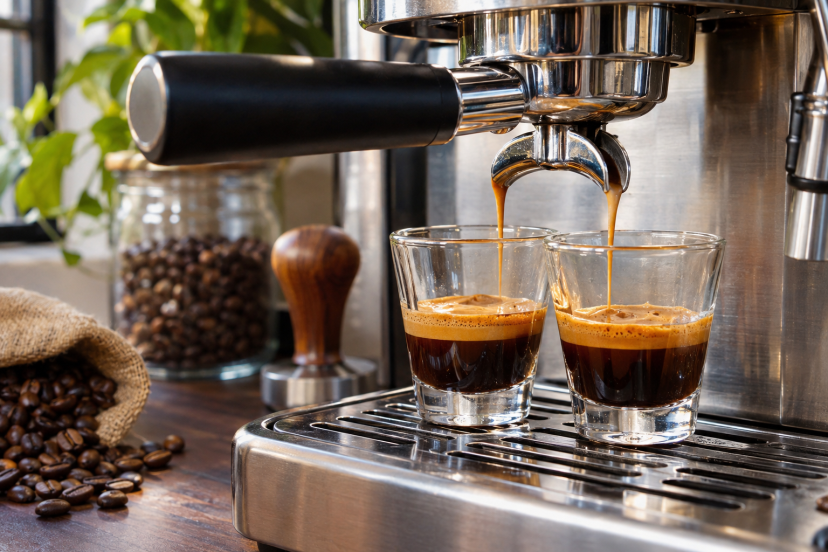
Pulling an espresso shot means brewing concentrated coffee by forcing hot water through finely ground coffee under pressure.
The term “pulling” comes from traditional lever espresso machines, which required baristas to pull a handle to generate brewing pressure. Modern electric machines use pumps, but the terminology remains popular.
Unlike drip coffee, which relies primarily on gravity, espresso uses pressure to extract coffee compounds quickly. This produces a concentrated beverage with intense flavor, a relatively thick texture, and often a golden-brown foam called crema.
Several factors influence espresso extraction:
- Grind size: Controls how easily water moves through the coffee.
- Coffee dose: Determines how much ground coffee enters the filter basket.
- Brew ratio: Compares the weight of ground coffee with the finished espresso.
- Water temperature: Influences how different flavor compounds dissolve.
- Brewing pressure: Helps push water through the compacted coffee bed.
- Extraction time: Indicates how quickly the target beverage weight is reached.
Understanding these variables makes espresso brewing easier to repeat and improve.
What You Need to Pull Espresso Shots
Before brewing, prepare the equipment and ingredients needed for consistent extraction.
Espresso Machine
Choose a machine capable of delivering stable brewing temperatures and approximately 9 bars of extraction pressure.
Many home machines advertise 15-bar pumps, but that does not mean coffee should be extracted at 15 bars. The important measurement is pressure during brewing.
A machine with manual shot control is especially useful because it allows you to stop extraction at your desired yield.
Burr Coffee Grinder
A burr grinder is one of the most important tools for making espresso.
Unlike blade grinders, burr grinders produce more consistent coffee particles and allow precise adjustments. Espresso requires a sufficiently fine grind to create resistance against pressurized water.
Choose a grinder specifically designed for espresso rather than one offering only broad grind settings.
Fresh Coffee Beans
Use quality whole-bean coffee with a clearly labeled roast date when possible.
Medium and medium-dark roasts are approachable starting points because they often provide chocolate, caramel, nutty, and balanced flavors.
Light roasts can also make excellent espresso but may require finer grinding, higher temperatures, or longer brew ratios.
Additional Accessories
A digital scale, appropriately sized tamper, clean portafilter, and small espresso cup help improve consistency.
A needle distribution tool can also break up clumps, although it is optional for beginners.
The Best Espresso Shot Ratio, Time, and Temperature
A standard double-shot recipe is an excellent starting point when learning how to pull espresso shots.
| Brewing Variable | Recommended Starting Point |
|---|---|
| Coffee dose | 18 grams |
| Espresso yield | 36 grams |
| Brew ratio | 1:2 |
| Extraction time | Approximately 25–30 seconds |
| Water temperature | 195–205°F (90–96°C) |
| Brew pressure | Around 9 bars |
| Grind size | Fine, adjusted to taste |
These are starting guidelines, not universal requirements. Basket capacity, coffee variety, roast level, and machine design can change the ideal recipe.
The 1:2 ratio means that 18 grams of ground coffee produces 36 grams of finished espresso. Measuring by weight is more reliable than measuring volume because crema can distort how much liquid appears in the cup.
How to Pull Espresso Shots Step by Step
Follow these steps to prepare a double espresso shot at home.
Step 1: Preheat Your Espresso Machine
Turn on the espresso machine and allow it to reach its recommended operating temperature.
Even machines with rapid heating systems may benefit from warming the portafilter and cup.
If recommended by the manufacturer, run a short water-only cycle through the group head. This also helps rinse away loose coffee residue.
Wipe the filter basket dry before adding ground coffee. Moisture inside the basket can cause grounds to clump and interfere with even preparation.
Step 2: Measure Your Coffee Beans
Place a container on your digital scale and measure 18 grams of whole coffee beans.
Using the same dose makes it easier to compare shots and identify which adjustments improve the flavor.
However, always respect your basket’s rated capacity. An 18-gram dose may be inappropriate for a smaller basket.
Step 3: Grind Your Coffee Finely
Grind the beans using an espresso-capable burr grinder.
The grounds should feel fine, but there is no single grind setting that works for every grinder or coffee bean.
Start within your grinder’s recommended espresso range.
If water flows too quickly, the grind may be too coarse. If the machine struggles to push water through the coffee, the grind may be too fine.
Freshly grinding coffee immediately before brewing helps preserve its aroma and flavor.
Step 4: Distribute the Coffee Grounds
Transfer the ground coffee into a clean, dry portafilter basket.
Gently tap the portafilter or use a distribution tool to spread the coffee evenly.
Unevenly distributed grounds can create areas of different resistance, allowing water to travel through some sections faster than others.
This problem, known as channeling, may produce uneven extraction.
If using a needle distribution tool, gently stir through the grounds to break up clumps, then level the coffee surface.
Step 5: Tamp the Coffee Evenly
Place the portafilter on a stable surface and hold the tamper level above the basket.
Press down firmly and smoothly until the grounds form an even, compact coffee puck.
Consistency and a level surface are more important than achieving an exact tamping force.
Avoid tamping at an angle or repeatedly pressing and twisting aggressively.
Once the coffee is tamped, brush loose grounds from the basket rim to help the portafilter seal properly.
Step 6: Insert the Portafilter
Lock the prepared portafilter securely into the machine’s group head.
Place an espresso cup on a digital scale underneath the spouts and tare the scale to zero.
Begin brewing promptly after preparing the puck to avoid unnecessary changes in temperature and moisture.
Step 7: Start the Extraction
Activate the brew button or lever and begin timing.
For consistency, measure extraction time from the moment brewing starts, rather than from the first visible drop.
Many machines use pre-infusion, a brief stage in which water wets the coffee at reduced pressure before full-pressure extraction begins.
After several seconds, espresso should begin flowing into the cup.
A steady, controlled flow is desirable, but appearance alone cannot confirm proper extraction.
Watch the scale as the espresso approaches your target yield.
Step 8: Stop, Taste, and Evaluate
Stop the brewing process when the scale approaches 36 grams, accounting for any liquid that continues to drip after the pump stops.
Record the final beverage weight and extraction time.
Stir the espresso gently to combine its different layers, then taste.
A balanced shot should have pleasant sweetness, complementary acidity, and manageable bitterness.
If the shot tastes too sharp, hollow, harsh, or excessively bitter, use the troubleshooting techniques below to make your next extraction better.
How to Dial In Espresso Shots
Dialing in espresso means adjusting brewing variables to produce the best flavor from a particular coffee.
Start by keeping the coffee dose and target yield consistent, then change the grind size.
If Your Espresso Is Too Sour
A sharp, sour shot with little sweetness can indicate under-extraction.
Try grinding slightly finer while maintaining the same coffee dose and beverage yield.
This usually increases resistance, slows the flow, and allows more extraction.
If the timing is reasonable but the shot still tastes sour, a slightly longer beverage yield may improve balance.
If Your Espresso Is Too Bitter
Excessively bitter, dry, or harsh espresso may indicate over-extraction, although darker roasts naturally have more pronounced bitterness.
Try grinding slightly coarser or reducing the final beverage yield.
If your machine allows temperature adjustment, a slightly lower brewing temperature may also help certain dark-roasted coffees.
If Your Espresso Is Weak or Watery
Weak espresso can result from a grind that is too coarse, an overly long beverage yield, or insufficient coffee for the basket.
Start by checking the dose and brew ratio.
For example, 18 grams of coffee producing 60 grams of espresso will generally taste less concentrated than an 18-gram dose producing 36 grams.
If Your Shots Are Inconsistent
If identical settings produce wildly different shot times, review your preparation technique.
Check for clumped grounds, uneven distribution, tilted tamping, grinder retention, and inconsistent doses.
Change only one variable at a time so you can identify what actually improves your coffee.
Common Espresso Problems and How to Fix Them
| Problem | Possible Cause | What to Try |
|---|---|---|
| Shot flows too fast | Grind too coarse | Grind finer |
| Shot barely drips | Grind too fine or excessive dose | Grind coarser; check basket capacity |
| Espresso tastes sour | Possible under-extraction | Grind finer or increase yield |
| Espresso tastes bitter | Possible over-extraction | Grind coarser or shorten yield |
| Espresso sprays unevenly | Channeling | Improve distribution and tamping |
| Shot lacks body | High brew ratio or unsuitable grind | Reduce yield and reassess grind |
| Little or no crema | Coffee age, roast, or preparation | Check bean freshness and extraction |
Keep in mind that these symptoms can have more than one cause.
For example, channeling can produce both sour and bitter flavors because different sections of the coffee puck extract unevenly.
Crema is also not a definitive quality indicator. Its amount depends on coffee freshness, roast, bean variety, and brewing conditions.
Common Mistakes to Avoid When Pulling Espresso
Even with reliable equipment, small preparation mistakes can affect the final result.
Using Pre-Ground Coffee Without Adjusting the Recipe
Pre-ground coffee may not have the correct particle size for your machine and basket.
A grinder allows you to adjust resistance as needed. If using pre-ground coffee, a compatible pressurized filter basket may be more forgiving.
Ignoring the Coffee Dose
Adding different amounts of coffee each time makes troubleshooting difficult.
Measure your dose consistently and use a basket appropriate for that quantity.
Following the 30-Second Rule Too Strictly
An espresso shot that tastes excellent after 24 or 35 seconds does not automatically need adjustment.
Time is a diagnostic tool, not a substitute for tasting.
Forgetting Machine Maintenance
Old coffee oils, residue, and mineral buildup can affect flavor and machine performance.
Clean the portafilter and basket regularly, maintain the steam wand, and follow the manufacturer’s recommended cleaning and descaling schedule.
Use water that meets your machine’s specifications rather than assuming all filtered or distilled water is suitable.
Frequently Asked Questions About Pulling Espresso Shots
1. How long should it take to pull an espresso shot?
A common starting target is approximately 25–30 seconds for a double espresso shot, measured from the beginning of brewing. However, timing varies depending on coffee grind, dose, roast level, and pre-infusion. Use the finished beverage weight and flavor to determine whether the extraction needs adjustment.
2. How many grams of coffee do you need for a double espresso shot?
A typical modern double espresso uses approximately 16–20 grams of ground coffee, depending on basket capacity. An 18-gram dose is a practical starting point. At a 1:2 brew ratio, this would produce approximately 36 grams of espresso.
3. Why is my espresso shot coming out too fast?
Fast espresso extraction is often caused by a grind that is too coarse, but insufficient coffee or channeling can also contribute. Check your dose and puck preparation, then adjust the grinder slightly finer. Keep your target yield consistent while evaluating changes.
4. Can you pull espresso shots without an espresso machine?
You can prepare strong, concentrated coffee using a Moka pot, AeroPress, or similar brewing device. However, these methods do not generally reproduce the controlled high-pressure extraction of a traditional espresso machine. The resulting coffee can still work well in milk-based drinks.
5. What is the difference between a single and double espresso shot?
A single espresso traditionally uses a smaller dose and produces a smaller beverage, while a double uses approximately twice as much coffee. Modern double shots often use around 18 grams of coffee to produce 36 grams of espresso. Exact amounts vary by coffee shop, equipment, and recipe.
Final Thoughts: Practice Makes Better Espresso
Learning how to pull espresso shots takes practice, but the process becomes much easier once you understand the relationship between grind size, dose, brew ratio, and extraction time.
Start with a simple 18-gram dose and 36-gram yield, prepare the coffee puck carefully, and evaluate every shot by taste. Rather than changing several settings at once, make small adjustments and record what works.
With consistent technique, fresh coffee beans, and the right equipment, you can make rich, balanced espresso at home without depending on complicated brewing methods or expensive accessories.