Few things are more disappointing than expecting a smooth, aromatic cup of coffee and getting something harsh, smoky, or unpleasantly bitter instead. A slightly roasted character can be enjoyable, especially with darker beans, but coffee should not taste like charcoal, ash, or something scraped from the bottom of a burned pan.
So, why does your coffee taste burnt?
The most common causes are over-roasted or stale beans, an overly fine grind, excessive extraction, incorrect coffee-to-water measurements, dirty brewing equipment, or leaving brewed coffee on a hot plate for too long. Water temperature can contribute, but boiling water does not literally burn beans that have already been roasted at much higher temperatures. Instead, hotter water can extract bitter compounds more aggressively, particularly from dark-roasted or finely ground coffee.
Fortunately, you usually do not need to replace your coffee maker. A few small adjustments to your beans, grind, water, brewing time, or cleaning routine can dramatically improve the flavor.
“Reheating, boiling or prolonged holding on a warming platform will turn even the best coffee bitter.”
— EatingWell
Key Takeaways
Burnt-tasting coffee is usually caused by dark or stale beans, over-extraction, excessive heat after brewing, or dirty equipment.
Beans that appear extremely dark and oily may naturally produce stronger smoky, ashy, or bitter flavors.
Grinding coffee too finely increases extraction and can make the final cup taste harsh.
For most hot brewing methods, aim for water between approximately 195°F and 205°F.
Do not leave brewed coffee sitting on a warming plate for an extended period.
Clean your coffee maker, grinder, basket, carafe, and reusable filter regularly to remove old coffee oils.
Change only one brewing variable at a time so you can identify what is causing the problem.
Four Helpful Products for Fixing Burnt-Tasting Coffee
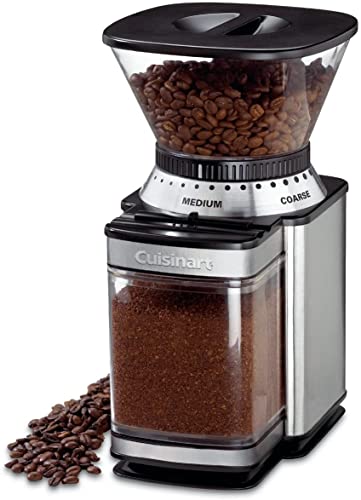
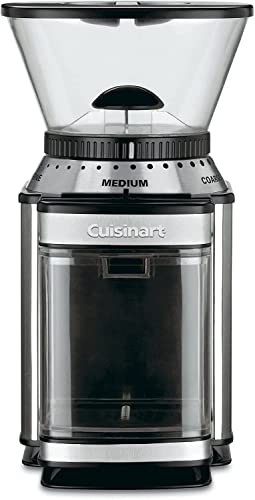
The CUISINART Electric Burr Coffee Grinder in stainless steel offers optimum flavor with an 18-position grind selector. With dimensions of 10.75"L x 7.13"W x 6"H and a weight of 4.5 pounds, it's designed for home use. Removable features include an 8 oz. bean hopper and grind chamber for easy cleaning. The grinder holds enough for 32 cups, and the one-touch power bar with an electric timer ensures convenience.
Optimal Flavor: 18-position grind selector for a uniform grind.
Removable Features: 8 oz. bean hopper and grind chamber are fully removable.
Convenient Design: One-touch power bar with an electric timer, heavy-duty motor, and additional scoop/cleaning brush.
Cons
Specific Use: Primarily designed for home use.
Weight: Weighs 4.5 pounds, slightly heavier than some compact grinders.
Material: Made of stainless steel, which may not suit all aesthetic preferences.
This burr grinder provides multiple grind settings, making it easier to match the particle size to drip, pour-over, French press, and other brewing methods. It can help reduce the fine, powdery particles commonly produced by blade grinders.
Best for: Improving grind consistency and reducing over-extraction.
The TIMEMORE Coffee Scale Basic 3 combines precise measurements with brewing tools designed for pour-over and espresso preparation. It measures from 0.2 grams up to 2 kilograms in 0.1-gram increments, helping users maintain consistent coffee-to-water ratios and monitor espresso extraction more accurately.
Accurate Measurements: Detects weights from 0.2 grams with 0.1-gram precision.
Dedicated Brewing Modes: Includes separate settings for espresso, pour-over, and regular weighing.
Compact and Rechargeable: Features a lightweight design, long-lasting battery, and USB-C charging.
Cons
Premium Price: Costs more than many basic digital coffee scales.
Limited Capacity: The 2-kilogram limit may not suit larger brewing containers.
Learning Curve: The automated modes and flow-rate functions may take time to master.
This digital scale measures coffee and water while also providing a timer. It can help you maintain a repeatable coffee-to-water ratio and monitor the total brewing time.
Best for: Improving consistency in pour-over, French press, AeroPress, and espresso preparation.
The KT THERMO Instant-Read Dial Thermometer provides a simple way to monitor the temperature of coffee, hot chocolate, and milk foam. Its analog display measures temperatures from 0°F to 220°F, covering the range needed for brewing coffee, steaming milk, and preparing other hot or cold drinks.
Wide Temperature Range: Measures from 0°F to 220°F.
Adjustable Clip: Attaches securely while keeping the dial easy to read.
No Batteries Required: Uses a simple, manually powered analog design.
Cons
Slower Readings: An analog dial may respond more slowly than a digital thermometer.
No Digital Features: Does not include alerts, backlighting, or saved readings.
Wipe-Clean Only: It should not be submerged or placed in a dishwasher.
A simple thermometer allows you to check brewing-water temperature rather than relying on guesswork. It can also be useful when steaming milk for lattes and cappuccinos.
Best for: Identifying excessively hot or insufficiently heated brewing water.
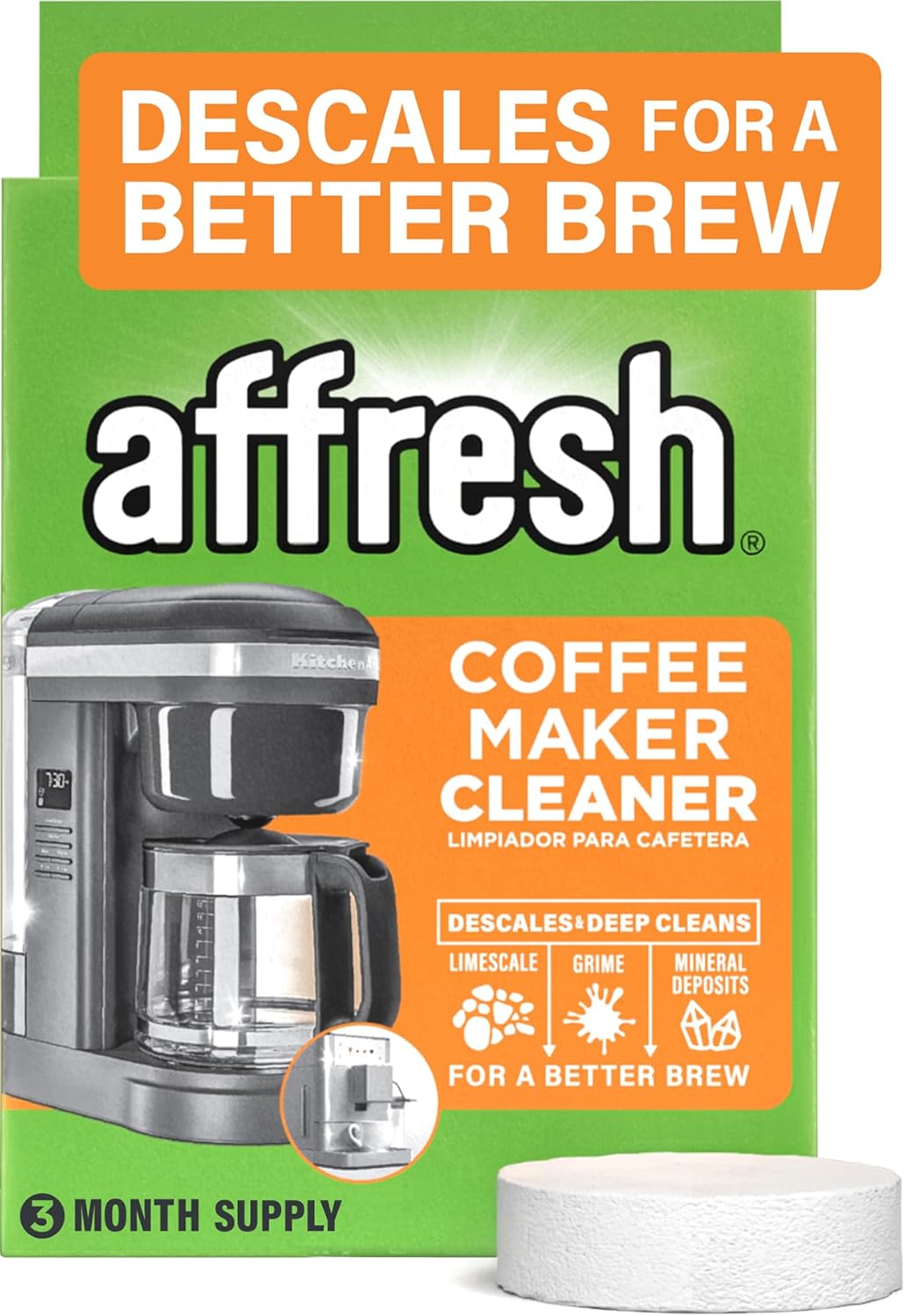
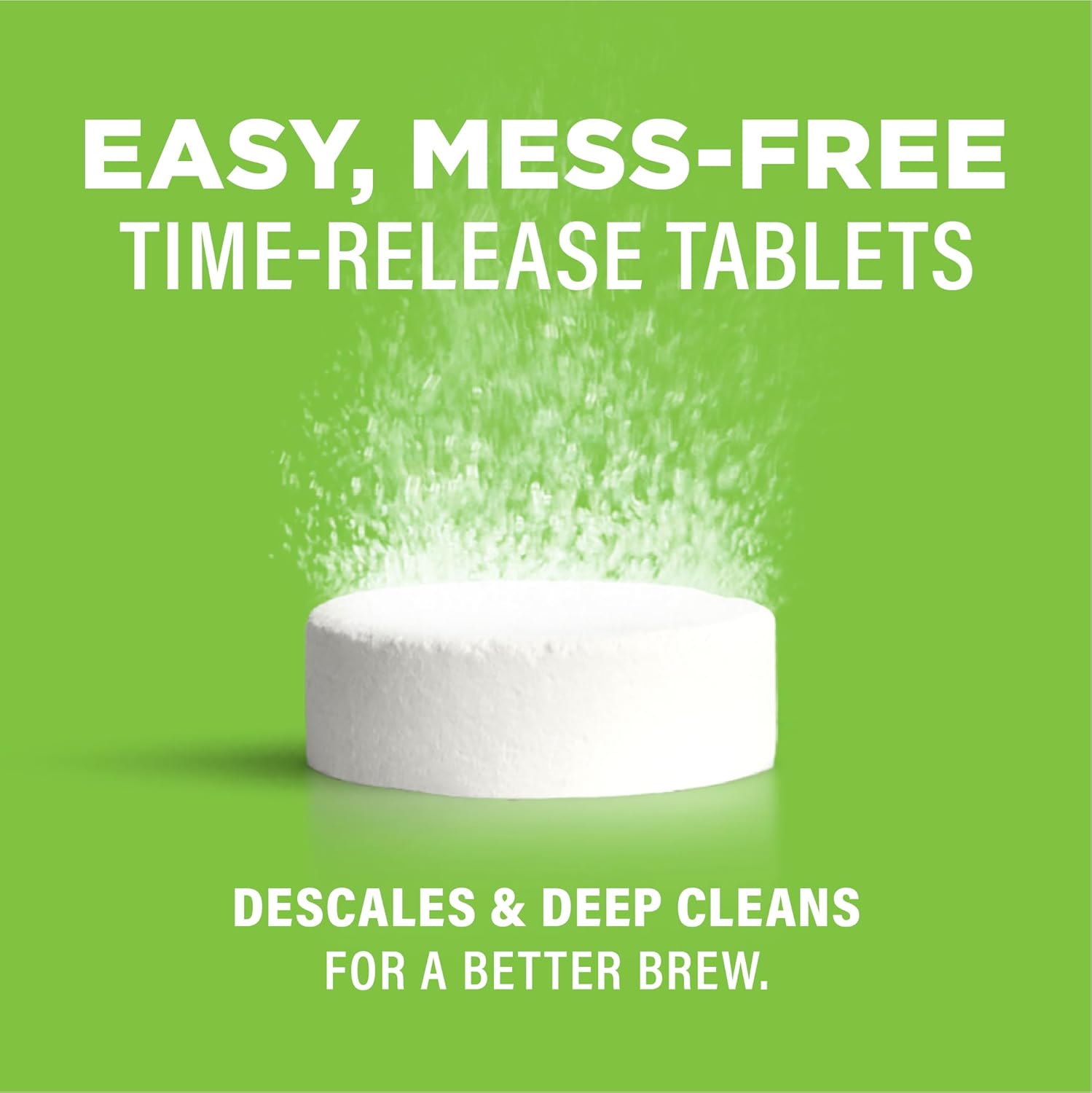
Affresh Coffee Maker Cleaner Tablets offer a convenient way to remove hard-water deposits and mineral buildup from compatible coffee machines. Designed for both multi-cup and single-serve brewers, the tablets clean areas inside the machine that are difficult to reach during routine washing.
Broad Compatibility: Works with many multi-cup and single-serve coffee makers.
No Vinegar Odor: Cleans without leaving behind a strong vinegar smell.
Easy to Use: Premeasured tablets eliminate mixing and measuring.
Cons
Only Three Tablets: The standard package provides a limited number of cleaning cycles.
Machine Instructions Required: Cleaning steps can vary between coffee-maker models.
Extra Rinsing Needed: The brewer may require additional water cycles after cleaning.
These tablets are designed to remove mineral buildup and residue from compatible multi-cup and single-serve coffee makers. Always consult your machine’s cleaning instructions before using any cleaning product.
Best for: Maintaining machines affected by residue or hard-water deposits.
What Does Burnt Coffee Taste Like?
People use “burnt” to describe several related flavors. Your coffee may taste:
Smoky
Ashy
Charred
Acrid
Excessively bitter
Dry or astringent
Metallic
Like burned toast
Like old coffee from an office pot
These flavors do not always have the same cause. An ashy flavor may come directly from heavily roasted beans, while a bitter and drying sensation may indicate over-extraction. A stale, smoky taste can also develop when old coffee oils accumulate inside a grinder or brewer.
Before adjusting your brewing method, taste the coffee carefully. Identifying whether the problem is predominantly smoky, bitter, stale, or metallic will help you find the most likely cause.
1. Your Coffee Beans May Be Roasted Too Dark
The roast level is one of the first things to examine. Dark-roasted beans are exposed to heat longer than light- or medium-roasted beans. That extended roasting process reduces some of the bean’s original fruit, floral, and acidic characteristics while creating deeper chocolate, caramelized, smoky, and roasted flavors.
A well-developed dark roast can taste rich and full-bodied. However, an extremely dark roast may taste predominantly charred, bitter, or ashy.
Look at your beans under good lighting. Very dark beans with a shiny or oily surface are more likely to produce an intense roasted flavor. Oil on the surface is not automatically a defect, but it can indicate that the roast has progressed far enough for oils to migrate outward.
How to fix it
Try a medium or medium-dark roast from the same roaster. If the burnt flavor disappears without changing your brewing technique, the roast level was probably the main cause.
When buying beans, look for flavor descriptions such as:
Be more cautious with beans described primarily as smoky, intense, bold, French roast, Italian roast, or extra dark if you are sensitive to burnt flavors.
2. The Beans Could Be Stale
Freshly roasted coffee gradually loses aroma and flavor as it interacts with oxygen, moisture, heat, and light. Stale coffee does not always taste simply “old.” It can become flat, woody, bitter, papery, or unpleasantly roasted.
Ground coffee stales faster than whole beans because more surface area is exposed to air. Keeping coffee in an open bag near a warm appliance or in direct sunlight can accelerate the process.
How to fix it
Purchase coffee in quantities you can reasonably use while it is still flavorful. Store the beans in an airtight, opaque container in a cool, dry cabinet.
Avoid keeping everyday coffee in the refrigerator. Repeatedly taking the container in and out can expose the beans to moisture and odors. Freezing can work for longer storage, but the coffee should be divided into airtight portions so each portion is thawed only once.
Grinding immediately before brewing is another effective way to preserve flavor.
3. Your Grind Is Too Fine
Grind size controls how quickly water extracts flavor from coffee. Fine particles provide more surface area and create greater resistance to water flow. If the grounds are too fine for your brewing method, the water may extract too much from them.
The result is often bitter, drying, hollow, or burnt-tasting coffee.
Each brewing method requires a different general grind range:
These are starting points, not absolute rules. Grinder settings vary, and the right adjustment depends on the coffee, equipment, dose, and brewing time.
How to fix it
Move your grinder one or two settings coarser and brew again without changing anything else. If the cup becomes smoother and less bitter, the original grind was probably too fine.
A burr grinder generally produces more consistent particles than a blade grinder. Blade grinders can create a mixture of large pieces and powder-like fines. Those fines extract rapidly and may add bitterness even when the overall grind looks relatively coarse.
4. The Coffee Is Over-Extracted
Extraction is the process of dissolving flavors from coffee grounds into water. The goal is to extract enough to create sweetness, acidity, aroma, and body without pulling out an excessive amount of harsh, drying compounds.
Over-extracted coffee commonly tastes:
Bitter
Dry
Astringent
Hollow
Harsh
Burnt or smoky
Over-extraction can result from several variables working together:
Grinding too finely
Brewing for too long
Using too much water
Using too little coffee
Agitating the grounds excessively
Allowing water to move too slowly through the coffee bed
How to fix it
Depending on your brewing method, try one of the following:
Use a slightly coarser grind.
Shorten the brewing time.
Increase the amount of coffee slightly.
Reduce unnecessary stirring or agitation.
Check whether a clogged filter is slowing the flow.
Make sure the coffee bed is not compacted.
Do not change all the variables at once. Start with grind size because it has a major effect on both extraction rate and brewing time.
5. Your Water May Be Too Hot
For most hot brewing methods, a useful starting range is approximately 195°F to 205°F. However, the ideal temperature can vary with roast level and brewing style.
Dark roasts are generally easier to extract than dense, lightly roasted beans. If you use water near the top of the standard temperature range with a very dark roast, the result may taste more bitter or ashy. Lowering the temperature slightly can soften the cup.
It is worth clarifying that brewing water does not normally “burn” the grounds in the literal sense. Coffee beans experience far higher temperatures during roasting. The problem is that very hot water can accelerate extraction and emphasize bitter, roasted compounds.
How to fix it
If you use a kettle without temperature controls, bring the water to a boil and let it rest briefly before brewing. A thermometer provides a more accurate measurement.
For dark-roasted coffee, experiment with a temperature around 185°F to 195°F. For medium and light roasts, begin closer to the standard 195°F to 205°F range.
If you use an automatic brewer, you may not be able to change the brewing temperature. In that case, adjust the grind size, dose, or roast level instead.
6. You Are Using Too Little Coffee
Using less coffee may seem like a way to produce a milder cup, but it can have the opposite effect. When a small amount of coffee is exposed to a large quantity of water, the grounds can become over-extracted.
That creates a cup that is simultaneously weak and bitter—an especially confusing combination.
How to fix it
Start with a coffee-to-water ratio of approximately 1:16. That means using one gram of coffee for every 16 grams of water.
For example:
15 grams of coffee to 240 grams of water
20 grams of coffee to 320 grams of water
30 grams of coffee to 480 grams of water
If the coffee still tastes harsh, adjust the grinder slightly coarser before making a major change to the ratio.
A digital scale is more consistent than measuring beans by volume because different beans and roast levels can occupy different amounts of space.
7. The Coffee Sat on the Hot Plate Too Long
A coffee maker’s warming plate can keep a carafe hot, but it cannot preserve freshly brewed flavor indefinitely. Continued heating causes aromatic compounds to disappear while oxidation and evaporation alter the remaining coffee.
Over time, the cup becomes concentrated, flat, bitter, and burnt-tasting. The effect is especially noticeable when only a small amount remains in the carafe.
How to fix it
Drink the coffee shortly after brewing. If you need to keep it warm, transfer it to a clean thermal carafe rather than leaving it on direct heat.
Avoid reheating the same coffee repeatedly. Brewing a smaller batch usually produces a better result than making a full pot and keeping it hot for several hours.
8. Old Coffee Oils Are Coating Your Equipment
Coffee contains oils that stick to grinders, filter baskets, reusable filters, carafes, group heads, and internal brewing components. Over time, these oils oxidize and become rancid.
Fresh coffee passing through dirty equipment can pick up stale, bitter, or burnt flavors. A quick rinse with water may not remove oily residue.
How to fix it
After each use:
Discard the grounds.
Rinse the brew basket and removable filter.
Wash the carafe.
Wipe the showerhead or dispensing area when accessible.
Allow removable components to dry completely.
Periodically use a cleaner intended for coffee equipment, following the manufacturer’s instructions. If your machine develops mineral scale, run the recommended descaling process separately. Cleaning removes coffee oils, while descaling targets mineral deposits; they are related but not identical tasks.
9. Your Coffee Maker Has Mineral Buildup
Hard water leaves calcium and other mineral deposits inside a coffee machine. Scale can affect water flow, heating performance, brewing time, and temperature stability. If water moves too slowly through the grounds, the coffee may over-extract.
Mineral buildup can also produce chalky, metallic, or generally unpleasant flavors that some people describe as burnt.
How to fix it
Descale the machine according to its instruction manual. The correct frequency depends on water hardness and how often you brew. A machine used daily in a hard-water area may need descaling more frequently than one used occasionally with filtered water.
Do not assume that vinegar is safe for every coffee maker. Some manufacturers specify a particular descaling solution or procedure.
10. The Water Quality Is Affecting the Flavor
Coffee is mostly water, so unpleasant-tasting water will usually produce unpleasant coffee. Heavy chlorine, excessive mineral content, metallic plumbing flavors, or extremely soft water can all affect extraction and taste.
Water with excessive hardness can contribute to scale, while water with very low mineral content may produce a flat or unbalanced cup.
How to fix it
Taste the water by itself. If it tastes strongly of chlorine, metal, or minerals, try filtered water and compare the results.
Avoid distilled water unless your coffee-machine manufacturer specifically recommends it. Coffee generally needs some mineral content for balanced extraction, and certain machines rely on sensors that may not work properly with extremely low-mineral water.
11. The Carafe or Travel Mug May Be the Problem
Sometimes the brewer is not responsible. Coffee residue inside a thermal carafe, travel mug, lid, rubber gasket, or silicone seal can create a persistent burnt smell.
Travel-mug lids are especially easy to overlook because coffee oils can collect inside valves and narrow channels.
How to fix it
Brew the coffee and taste it from a clean ceramic cup. If it tastes fine before being poured into your usual container, thoroughly disassemble and clean the container and lid.
Replace seals or plastic components that continue to retain unpleasant odors after careful cleaning.
A Simple Troubleshooting Test
If you are unsure what is causing the burnt flavor, use this process:
Clean the brewer, filter basket, and carafe.
Use fresh medium-roast whole beans.
Grind the coffee immediately before brewing.
Start with a 1:16 coffee-to-water ratio.
Use filtered water.
Keep the temperature within an appropriate range.
Serve the coffee immediately instead of leaving it on a hot plate.
If it remains bitter, grind slightly coarser.
If it tastes sour or thin after that adjustment, move one step finer.
Changing one variable at a time makes it much easier to identify the actual problem.
Frequently Asked Questions
1. Can boiling water burn coffee grounds?
Boiling water does not usually burn coffee grounds in a literal sense because the beans were exposed to much higher temperatures during roasting. However, very hot water can increase extraction and emphasize bitter, smoky, or astringent compounds. Let boiling water cool briefly, particularly when brewing a dark roast.
2. Why does my coffee suddenly taste burnt?
A sudden change may be caused by stale beans, a different roast, an accidentally altered grinder setting, mineral buildup, dirty equipment, or coffee left on a hot plate. Check whether you recently changed beans or settings, and then clean the machine before adjusting the recipe.
3. Why does coffee taste burnt from my coffee maker?
The machine may be keeping the coffee hot for too long, brewing too slowly because of scale, or transferring old coffee oils into the fresh pot. Clean the basket and carafe, descale when appropriate, and taste the coffee immediately after brewing.
4. Does dark-roast coffee always taste burnt?
No. A good dark roast can taste rich, chocolatey, nutty, or caramelized without being unpleasant. However, very dark beans naturally contain more pronounced smoky and roasted flavors. If every dark roast tastes burnt to you, switch to a medium roast.
5. How do I make bitter coffee taste better after it is brewed?
Adding milk, cream, or a small amount of sweetener can soften bitterness, but it will not correct the underlying extraction problem. A tiny pinch of salt may reduce the perception of bitterness, although prevention is better. For the next batch, use a coarser grind, shorten the brewing time, lower the temperature, or remove the coffee from direct heat sooner.
Enjoy a Smoother, Better-Balanced Cup
Burnt-tasting coffee is rarely caused by one mysterious flaw. It usually comes down to the beans, extraction, cleanliness, or what happens to the coffee after brewing.
Begin with fresh medium-roast beans, a consistent grind, filtered water, accurate measurements, and clean equipment. Then adjust one variable at a time. In many cases, moving the grinder slightly coarser or removing the carafe from the warming plate is enough to turn a harsh pot into a smooth and enjoyable cup.
As a coffee writer, my goal is to educate, inspire, and build a vibrant coffee community. Through my articles, I share insights on origins, processing, brewing techniques, and flavors. I aim to empower readers of all levels to make informed choices, try new brewing methods, and deepen their appreciation for coffee's art and science. Let's come together and celebrate our love for this remarkable beverage as we embark on a flavorful journey.
*We may earn a commission for purchases made using our links. Please see our disclosure to learn more. Few drinks signal the arrival of fall quite like a ...
*We may earn a commission for purchases made using our links. Please see our disclosure to learn more. Ristretto and espresso may look almost identical at first glance. ...
*We may earn a commission for purchases made using our links. Please see our disclosure to learn more. Coffee processing is one of the most important and often ...