Why Cold Brew Tastes Less Acidic?
*We may earn a commission for purchases made using our links. Please see our disclosure to learn more.
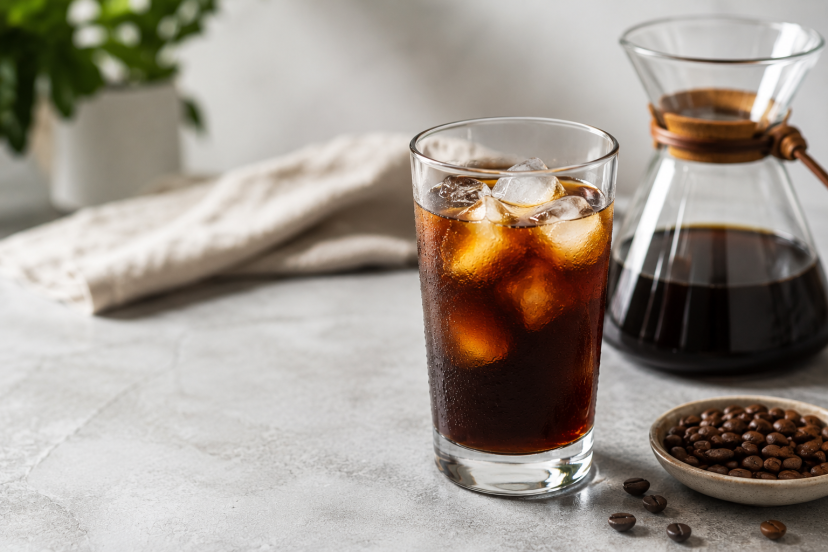
Cold brew has become a favorite among coffee drinkers who prefer a smoother, rounder cup without the sharp tang sometimes associated with traditional hot coffee. Although both drinks begin with roasted coffee beans and water, the brewing temperature, extraction time, grind size, and serving method create noticeably different flavor profiles.
The primary reason cold brew tastes less acidic is that cool water extracts coffee compounds differently from hot water. Heat quickly dissolves aromatic oils, acids, bitter compounds, and other soluble materials from ground coffee. Cold brewing uses time rather than heat, usually steeping coarse grounds for 12 to 24 hours. This slower extraction tends to produce a drink with lower titratable acidity and fewer of the sharp sensory characteristics that people describe as sour, bright, or acidic.
However, the answer is more nuanced than saying cold brew simply contains no acid. Coffee brewed with cold water remains acidic, and its measured pH may sometimes be closer to hot coffee than expected. What changes most consistently is the concentration and balance of extracted acids, along with how sweetness, bitterness, aroma, body, temperature, and dilution affect the drinker’s perception.
Understanding this distinction explains why cold brew can taste mellow even when laboratory measurements show that it is not dramatically different from hot coffee on the pH scale.
“Cold brew coffees exhibited a lower titratable acidity than the hot coffee brews.”
— Food Research International, “Chemical and Sensory Evaluation of Cold Brew Coffees”
Key Takeaways
- Cold water extracts coffee acids and flavor compounds differently from hot water.
- Cold brew commonly has lower titratable acidity, which can reduce the sharp or sour sensation associated with coffee.
- pH alone does not fully explain how acidic a coffee tastes.
- Darker roasts, coarse grounds, longer steeping, dilution, and serving temperature can make cold brew taste even smoother.
- Cold brew is not acid-free and is not automatically suitable for everyone with heartburn or digestive sensitivity.
- Bean origin, roast level, recipe, water quality, and brewing equipment all affect the finished flavor.
Four Recommended Products for Making Smooth Cold Brew
1. OXO Good Grips 32-Ounce Cold Brew Coffee Maker
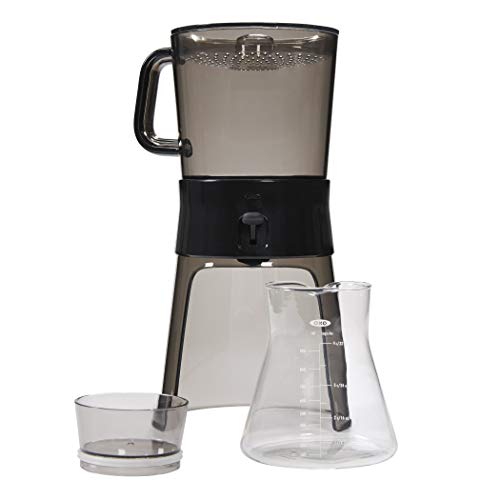


The OXO Good Grips Cold Brew Coffee Maker is a 32-ounce iced coffee maker designed to brew smooth, low-acid cold brew concentrate at home. Its overnight steep-and-release system makes the process simple, while the Rainmaker top helps distribute water evenly over the coffee grounds for balanced extraction. The included borosilicate glass carafe has clear measurement markings and stores easily in the refrigerator, making it practical for preparing multiple servings ahead of time.
- Even Extraction: The Rainmaker top helps saturate coffee grounds evenly for smoother flavor.
- Easy Brewing Control: The brew-release switch lets you start and stop filtration when needed.
- Reusable Filter: The stainless steel mesh filter is dishwasher safe and reduces the need for paper filters.
- Glass Carafe: The borosilicate carafe looks nice but still requires careful handling.
- Takes 12–24 Hours: It is not ideal for anyone who wants cold brew quickly.
- Counter Space: The taller design may take up more room while brewing.
The OXO Good Grips brewer is well suited to people who want to prepare concentrated cold brew with minimal mess. Its perforated “Rainmaker” top distributes water over the grounds, encouraging more even saturation. A brew-release switch drains the concentrate into a borosilicate glass carafe, and the reusable stainless-steel mesh filter reduces the need for disposable filters. The brewer is designed to produce enough concentrate for multiple servings.
Best for: Regular cold-brew drinkers who want consistent concentrate and controlled filtration.
2. OXO Brew Single Serve Pour-Over Coffee Maker


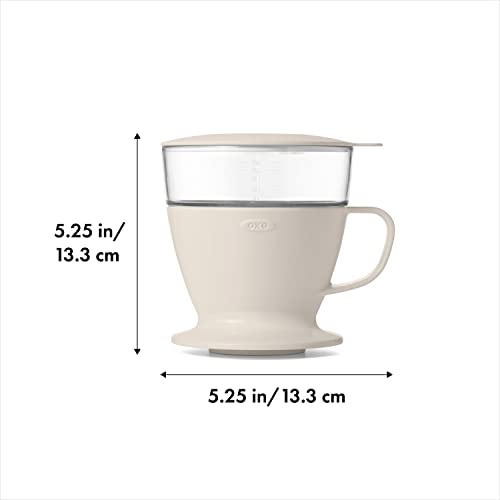
The OXO Brew Single Serve Pour-Over Coffee Maker is an easy, beginner-friendly brewer designed to deliver consistent, flavorful coffee every time—making it a great choice for Japanese iced coffee. Its auto-drip tank ensures steady water flow for even extraction, while measurement markings help you add the exact amount of water needed for a precise brew. The included lid helps retain heat during brewing and doubles as a drip tray for mess-free use. Lightweight, durable, and dishwasher-safe, this OXO pour-over offers a hassle-free way to enjoy bright, refreshing Japanese iced coffee at home.
- Effortless Brewing: Auto-drip tank controls water flow, ideal for beginners making Japanese iced coffee.
- Consistent Extraction: Measurement markings ensure correct water volume for balanced flavor.
- Convenient Design: Lid retains heat and doubles as a drip tray for tidy brewing.
- Plastic Build: Made from polypropylene and Tritan—less premium than metal or ceramic drippers.
- Limited Capacity: Maxes at 12 oz, which may not suit multiple servings.
- Less Control: Auto-drip function reduces manual pour control for advanced brewers.
The OXO Brew Single Serve Pour-Over Coffee Maker uses an auto-drip tank to control water flow for a balanced cup with minimal effort. It brews up to 12 ounces and includes a heat-retaining lid that doubles as a drip tray.
Best for: Beginners and single-cup coffee drinkers.
3. Takeya Deluxe Cold Brew Coffee Maker

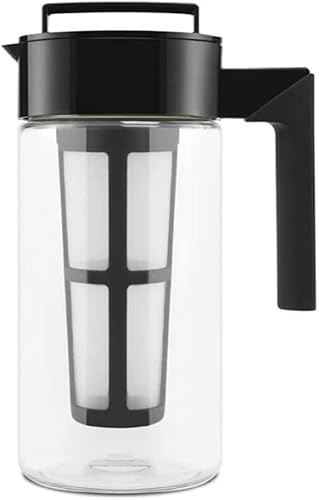
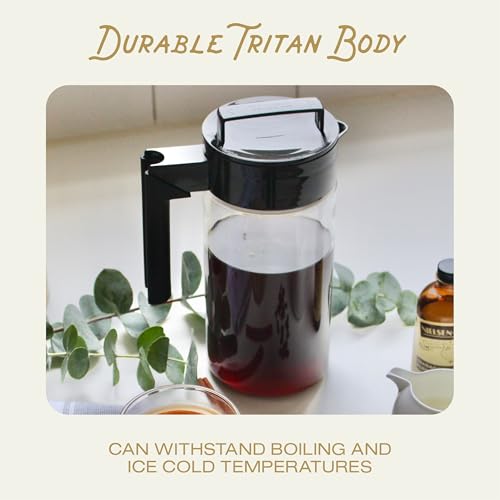
The Takeya Deluxe Cold Brew Coffee Maker is a 1-quart cold brew pitcher designed for smooth, less acidic coffee at home. Made from BPA-free Tritan, it is shatter-proof, stain-resistant, and odor-resistant, making it a durable option for daily use. Its fine-mesh filter helps keep grounds out of the coffee, while the airtight, leakproof lid helps preserve freshness and makes the pitcher easier to store in the refrigerator.
- Durable Design: The shatter-proof Tritan pitcher is made for everyday use.
- Airtight Lid: Helps keep cold brew fresh and reduces the risk of spills.
- Easy Storage: The compact 1-quart size fits most refrigerator doors.
- Smaller Batch Size: The 1-quart capacity may not be enough for larger households.
- Plastic Pitcher: Some users may prefer glass over Tritan plastic.
- Manual Brewing: It still requires steeping time and cleanup after use.
The Takeya Deluxe Cold Brew Coffee Maker features a fine-mesh filter that helps produce smooth, sediment-free coffee with minimal effort. Its airtight, leak-proof Tritan pitcher keeps cold brew fresh for days, while the compact design fits easily in most refrigerator doors.
Best for: Everyday cold brew drinkers who want a simple, space-saving brewer.
4. Hario “Mizudashi” Cold Brew Coffee Pot, 600ml, Black


The Hario “Mizudashi” Cold Brew Coffee Pot is a compact 600ml cold brew maker designed for easy refrigerator storage and everyday iced coffee preparation. Made with glass and durable resin components, it offers a simple steeping method that lets you brew cold coffee directly in the pot. Its slim shape, reusable filter, and dishwasher-safe design make it a practical choice for anyone who wants cold brew at home without a large or complicated setup.
- Compact Size: The 600ml capacity is easy to store in the refrigerator.
- Easy Cleaning: Dishwasher-safe parts make cleanup more convenient.
- Simple Brewing: Great for making cold brew without an electric machine.
- Smaller Capacity: The 600ml size may not be enough for multiple heavy coffee drinkers.
- Glass Body: It needs careful handling to avoid chips or breakage.
- Basic Features: It does not offer extra controls like a brew-release switch.
The Hario Mizudashi Cold Brew Coffee Pot features a reusable fine-mesh filter that brews smooth cold coffee while keeping grounds out of your cup. Its slim glass design fits easily in most refrigerators, and the dishwasher-safe components make cleanup simple.
Best for: Small households and anyone looking for an easy, compact cold brew maker.
What Does “Acidic” Mean in Coffee?
Coffee acidity can refer to several related but different ideas.
In coffee tasting, acidity is often a desirable flavor quality. Professional tasters may describe a coffee as bright, lively, crisp, sparkling, citrusy, apple-like, or wine-like. These descriptions do not necessarily mean the coffee is unpleasantly sour. Balanced acidity can make coffee taste fresh and complex.
Consumers may use “acidic” more broadly to describe coffee that tastes sharp, sour, biting, or harsh. Some people may also use the term when discussing heartburn, reflux, or stomach discomfort, even though sensory acidity and digestive responses are not the same thing.
Scientifically, researchers generally examine acidity using measurements such as pH and titratable acidity.
pH
The pH scale measures the concentration of hydrogen ions in a liquid. A lower pH indicates greater acidity, while a higher pH indicates lower acidity.
Most brewed coffee falls somewhere around pH 4.5 to 5.5, although the exact number depends on the beans, roast, water, grind, ratio, and brewing method.
The pH number does not reveal the complete sensory experience. Two coffees with similar pH readings can taste noticeably different.
Titratable Acidity
Titratable acidity measures the total amount of acid that can react with a base during testing. It provides information about the quantity and buffering behavior of acids in the drink rather than only measuring hydrogen ion concentration at a single moment.
Research comparing hot and cold brewing has found that cold-brewed coffee can have similar pH values to hot coffee while containing lower total titratable acids. This helps explain why a cold brew may taste smoother even when its pH does not appear dramatically higher.
Why Cold Water Changes Coffee Extraction
Brewing coffee is an extraction process. Water enters the ground coffee particles and dissolves hundreds of compounds, including acids, sugars, caffeine, aromatic molecules, oils, and browned substances created during roasting.
Temperature has a major effect on how quickly and efficiently these compounds dissolve.
Hot water has more molecular energy, so it moves through the coffee grounds and dissolves compounds rapidly. Standard hot brewing may take only a few minutes. During that short period, hot water extracts many of the volatile aromas and flavor-active substances responsible for coffee’s brightness, bitterness, fragrance, and complexity.
Cold or room-temperature water works much more slowly. A cold brew may require 12 to 24 hours to reach sufficient strength. Even with the longer contact time, cool water does not extract every substance in the same proportion as hot water.
Studies have found differences in acidity, antioxidant activity, total dissolved solids, browned compounds, and sensory qualities between hot and cold preparations. Cold brewing is therefore not simply hot brewing performed more slowly. It produces a different chemical balance.
Fewer Sharp-Tasting Compounds Dominate the Cup
Coffee contains many naturally occurring organic acids, including chlorogenic, citric, malic, acetic, quinic, and lactic acids. Their concentrations depend on the coffee species, growing conditions, processing method, roast level, storage, and brewing recipe.
During roasting, some acids break down while other compounds form. Brewing then determines how much of those substances enter the cup.
Hot water can extract acids and aromatic compounds quickly, making bright, fruity, or sharp notes more prominent. Cold extraction tends to create a softer flavor balance in which chocolate, caramel, nut, and brown-sugar notes may become more noticeable.
This does not mean cold water selectively removes every acid. Instead, it changes the relative proportions of the extracted materials. The resulting drink may have less titratable acidity and a less intense sour sensation.
The Specialty Coffee Association has reported that chilled hot brews in controlled research had lower pH values, indicating greater measured acidity, than corresponding cold brews. Sensory research has also found higher sourness in some hot-brewed samples.
Why pH Does Not Tell the Whole Story
Marketing descriptions sometimes claim that cold brew is dramatically less acidic than regular coffee. These claims should be interpreted carefully.
Research has shown that the pH values of hot and cold coffee may overlap. In one peer-reviewed comparison involving coffees from several origins, hot and cold brews had comparable pH values, even though hot coffee generally contained more total titratable acids.
This apparent contradiction occurs because pH and titratable acidity measure different properties.
A cup can have a particular pH but differ in how strongly it resists changes in pH, how many total acidic compounds it contains, and how those compounds interact with sweetness, bitterness, aroma, and mouthfeel.
Perceived acidity is also complex. Research examining individual acids in coffee has questioned whether specific acid concentrations directly and predictably determine what trained tasters perceive as acidity. Roast level and interactions among multiple compounds may matter as much as any individual acid.
Therefore, the most accurate explanation is that cold brew commonly tastes less acidic because of its overall extraction and sensory profile—not merely because of one pH number.
Cold Temperature Softens Flavor Perception
Serving temperature also affects how people experience coffee.
When coffee is hot, volatile aromatic compounds travel more readily from the liquid into the air. These aromas reach the nose and intensify the perception of flavor. As hot coffee cools, its sweetness, acidity, bitterness, and defects can become more or less apparent at different temperatures.
Cold beverages release fewer volatile aromas at once. This can make the drink seem quieter, smoother, and less aggressive. Chilling may also reduce the immediate perception of bitterness and sharpness.
This is one reason cold brew and chilled hot coffee are not identical. Iced coffee is generally brewed with hot water and then cooled or poured over ice. The initial hot extraction still captures compounds associated with the hot-brewed flavor profile. Cold brew is extracted without that high-temperature stage.
Controlled research comparing cold brew with chilled hot brew has found measurable chemical and sensory differences, even when the beverages were served at similar temperatures.
Dilution Can Make Cold Brew Taste Milder
Many cold-brew recipes produce a concentrate rather than a ready-to-drink beverage. The concentrate is later mixed with water, milk, or ice.
Dilution lowers the concentration of acids, caffeine, bitter compounds, and flavor solids in each serving. Milk can further soften the perception of acidity through its sweetness, fat, proteins, and creamy mouthfeel.
A concentrated cold brew may actually taste intense when consumed undiluted. Once diluted, however, it often becomes rounder and easier to drink.
The smoothness people associate with cold brew may therefore come from a combination of cold extraction and the way the beverage is served.
A common starting point is one part concentrate to one or two parts water or milk, although the correct dilution depends on the original coffee-to-water ratio.
Roast Level Influences Acidity
Roast level can significantly affect both measured and perceived acidity.
Light-roasted coffees often preserve more of the bean’s origin-specific qualities. They may produce floral, citrus, berry, stone-fruit, or apple-like notes that tasters interpret as bright acidity.
Darker roasting breaks down or transforms many acids and creates more caramelized, roasted, smoky, chocolate-like, and bitter flavors. Research measuring brewed coffees has found lower pH in lighter roasts than in darker roasts under certain testing conditions.
For an especially mellow cold brew, many drinkers prefer medium-dark or dark-roasted beans. These roasts can emphasize cocoa, toasted nut, caramel, and molasses flavors.
A light-roast cold brew can still taste bright and fruity. Cold extraction may soften its edges, but it will not erase the bean’s natural character.
Bean Origin and Processing Also Matter
Coffee is an agricultural product, so no single brewing method produces identical results with every bean.
Coffee grown in different regions develops different combinations of sugars, acids, and aromatic precursors. Elevation, soil, climate, variety, ripeness, and farm practices all influence the bean.
Processing also affects flavor:
- Washed coffee often tastes cleaner and brighter.
- Natural-process coffee may taste fruitier, sweeter, and fuller.
- Honey-process coffee frequently falls between those profiles.
- Low-elevation or naturally lower-acid coffees may produce chocolatey, nutty, or earthy cups.
Brazilian coffees are popular for cold brew because they commonly offer chocolate, nut, and caramel notes. Beans from Sumatra can create a heavier, earthy profile. Some Colombian blends provide a balance of chocolate sweetness and gentle fruit.
A highly acidic light-roast coffee will not necessarily become completely mellow simply because it is cold-brewed. Selecting the right beans remains important.
Grind Size Affects Smoothness
Cold brew is generally prepared with a coarse grind resembling coarse sea salt.
Coarse grounds slow extraction and are easier to filter. They can help produce a clean drink with less sediment.
Finely ground coffee exposes more surface area to the water. In a long steep, fine grounds may create excessive extraction, bitterness, muddiness, or a dry finish. Fine particles can also pass through metal filters and make the drink feel gritty.
An inconsistent grinder may produce both large chunks and powder-like particles. The small particles can overextract while the large particles underextract, creating an unbalanced brew.
For repeatable results, use a burr grinder and choose a coarse, reasonably uniform setting.
Steeping Time Matters
A typical cold-brew steep lasts between 12 and 24 hours.
A shorter brew may taste thin, weak, or unexpectedly sharp because the extraction is incomplete. A very long brew may become woody, bitter, dusty, or overly concentrated.
For room-temperature brewing, 12 to 16 hours is often sufficient. Refrigerator brewing may require 16 to 24 hours because extraction proceeds more slowly at lower temperatures.
The ideal time depends on the grind, coffee-to-water ratio, bean, roast level, and desired strength.
Taste the brew at several points when developing a recipe. Once it has enough sweetness, body, and flavor, strain it rather than automatically leaving it for the full 24 hours.
How to Make a Less-Acidic-Tasting Cold Brew at Home
Start with the following basic recipe:
Ingredients and Equipment
- 4 ounces of coarsely ground coffee
- 4 cups of filtered water
- A large jar or cold-brew maker
- A fine-mesh filter
- A storage container
Instructions
- Add the coarse coffee grounds to the brewing container.
- Pour in the water gradually, making sure all grounds become wet.
- Stir gently to break up dry pockets.
- Cover the container.
- Steep for 12 to 16 hours at room temperature or 16 to 24 hours in the refrigerator.
- Strain the coffee thoroughly.
- Dilute the concentrate with water, milk, or ice to taste.
- Refrigerate the finished brew in a sealed container.
For a smoother result, choose a medium-dark roast with chocolate, nut, or caramel tasting notes. Avoid grinding too finely, and do not extend the steeping time unnecessarily.
Filtered water can also improve flavor. Water with strong chlorine, mineral, or metallic tastes may make coffee seem harsher or less balanced.
Is Cold Brew Better for a Sensitive Stomach?
Some people report that cold brew feels gentler than hot coffee, but individual responses vary.
Its lower titratable acidity and smoother sensory profile may make it easier for certain drinkers to tolerate. However, cold brew still contains acids and caffeine. Caffeine can affect the lower esophageal sphincter and may aggravate reflux symptoms in susceptible people.
Cold-brew concentrate can also contain substantial caffeine because it is often made with a high coffee-to-water ratio. The final caffeine level depends on the beans, dose, steeping time, serving size, and dilution.
Cold brew should not be treated as a guaranteed solution for acid reflux, ulcers, or other digestive conditions. Anyone experiencing persistent symptoms should discuss them with a qualified healthcare professional.
Does Less Acid Mean Less Flavor?
Not necessarily.
Cold brew usually sacrifices some of the aroma and sparkling brightness associated with hot-brewed specialty coffee, but it can gain body, sweetness, and chocolate-like richness.
The best cold brew does not taste flat. It should have enough extraction to reveal the coffee’s sweetness and character without becoming muddy or bitter.
People who enjoy floral aromas and delicate fruit acidity may prefer Japanese-style iced coffee, which is brewed hot directly over ice. People who favor cocoa, caramel, nuts, and a thick mouthfeel may prefer immersion cold brew.
Neither method is inherently superior. They highlight different aspects of the same beans.
Final Thoughts
Cold brew tastes less acidic because cool water changes the extraction process. It generally draws out coffee compounds more slowly and in different proportions than hot water, often resulting in lower titratable acidity and reduced sourness.
Its perceived smoothness is also strengthened by cold serving temperatures, coarse grinding, darker roasts, filtration, and dilution. These factors suppress sharp sensations while emphasizing body, sweetness, chocolate, and caramel notes.
Cold brew is still an acidic beverage, and its pH may not differ dramatically from hot coffee in every recipe. The smoother flavor is best understood as the result of an entire brewing system rather than one simple chemical measurement.
By choosing balanced beans, using a coarse grind, controlling the steeping time, and diluting concentrate appropriately, home brewers can produce a mellow cup that retains plenty of flavor without the pronounced brightness of traditional hot coffee.
Frequently Asked Questions
1. Is cold brew actually less acidic than hot coffee?
Cold brew frequently has lower titratable acidity than hot coffee, meaning it may contain a lower overall concentration of acids capable of reacting during testing. Its pH, however, may be similar to that of hot coffee. It is generally more accurate to say that cold brew often tastes less acidic rather than claiming that every cold brew has a dramatically higher pH.
2. Why does cold brew taste smoother than iced coffee?
Cold brew is extracted with cool or room-temperature water. Iced coffee is brewed hot and then cooled. Hot water extracts acids, aromatic compounds, and bitter substances more rapidly, so iced coffee retains more of a traditional hot-brew flavor. Cold brew usually tastes rounder, heavier, and less sharp.
3. Which coffee roast is best for low-acid-tasting cold brew?
Medium-dark and dark roasts usually create the smoothest profile. Look for tasting notes such as chocolate, caramel, toasted nuts, brown sugar, or molasses. Light roasts can work, but they may retain more noticeable citrus, berry, or floral acidity.
4. Can cold brew still cause acid reflux?
Yes. Cold brew still contains natural coffee acids and caffeine. Although some people find it gentler, others may continue to experience reflux or stomach discomfort. Serving size, caffeine concentration, milk, sweeteners, and individual sensitivity can all influence the response.
5. How long should cold brew steep?
Cold brew typically steeps for 12 to 24 hours. At room temperature, 12 to 16 hours is a practical starting range. In the refrigerator, 16 to 24 hours may be needed. A longer steep is not always better; excessive contact time can produce bitterness, dryness, or woody flavors.